Commercial Flood Cleanup: Getting A Business Reopened
Reviewed By Hamza 8 Min Read
Quick Answer
Commercial flood cleanup follows the same core sequence as a home — extraction, removal of ruined materials, cleaning and treatment, then measured structural drying — but it is planned in phases around stock, staff and customers, so clean areas can keep trading or reopen sooner while sealed-off areas are dried and proved safe.
A flooded business faces the same contaminated water as a flooded home, with one added pressure: the premises earns nothing while it stays closed. Commercial flood cleanup therefore plans two things at once — making the building safe and dry, and doing it in an order that lets trading resume as early as the evidence allows.
How Commercial Flood Cleanup Differs From A Home Cleanup
The core sequence is familiar: water extraction, removal of materials flood water has ruined, cleaning with antimicrobial treatment, then structural drying proved by moisture readings. The scale and setting differ. Business premises add stock, racking, tills and computers, office partitions, public access and staff areas, often spread over a far larger floor than any home.
Flood water itself is no kinder in a workplace. Pros treat it as Category 3 water wherever it entered, so a shallow layer across a shop floor carries the same contamination questions as a flooded living room — and a much wider set of materials and people to plan around.
First Moves: Securing A Flooded Business Premises
The first moves protect people and then property. Keep staff and customers out of flooded areas, and treat power as unsafe where water reached outlets, distribution boards or equipment. If water is still entering, or drains are backing up, that problem is flagged before cleanup planning, because extracting water that is still arriving wastes the whole effort.
Then document before anything moves. Photograph every affected area as found, including water lines on walls, stock in place and plant rooms. A contents packout mindset helps here: inventory what flood water touched, separate dry stock from soaked stock, and keep the damaged group intact for the insurer until its fate is agreed.
Stock, Equipment And Records After A Business Flood
Stock decisions follow the material, not the price tag. Porous goods and anything in soaked cardboard packaging are usually unsalvageable after contaminated water, while sealed, hard-surfaced items can often be cleaned and disinfected. Food stock is treated most strictly of all, and any business handling food takes its reopening cue from the local officials who oversee food safety.
Equipment needs patience rather than optimism. Computers, tills and machinery that sat in flood water stay switched off until they have been checked, because internal damage is invisible at first glance. Paper records soaked by flood water are handled as contaminated, photographed for the record, and replaced from digital copies where those exist.
How Crews Phase Work So Parts Of A Site Can Reopen Sooner
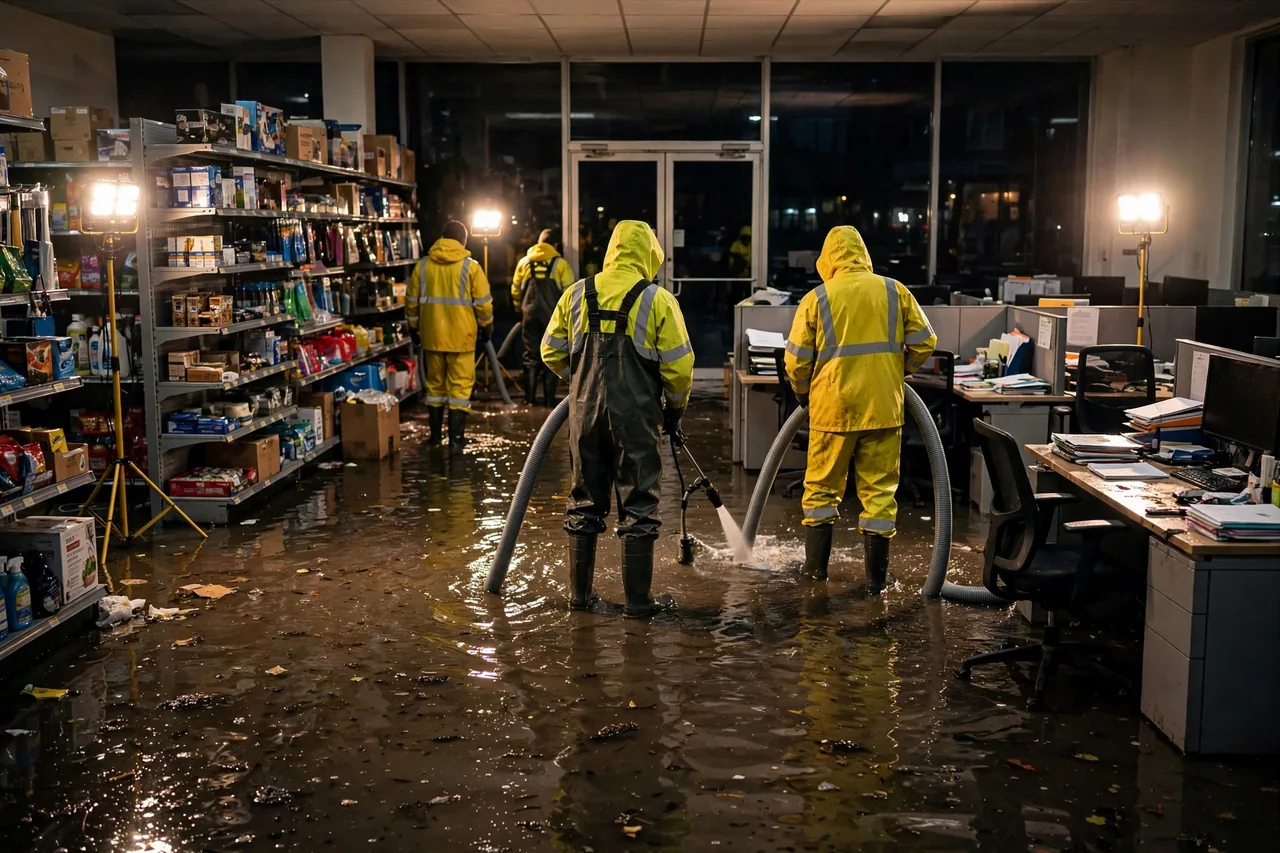
Phasing is where commercial work most clearly departs from a home job. A containment barrier can seal the flooded section of a premises, with a HEPA air scrubber filtering air while contaminated material is removed inside the barrier. Clean sections keep their own access routes, so staff can work and, where appropriate, customers can be served away from the cleanup zone.
Flood Water In Your Home Right Now?
One free call connects you with a local pro near you.
Within each phase, crews run the standard sequence: a submersible pump or truck-mounted extraction unit clears standing water, ruined flooring and wall bases come out, surfaces are cleaned and treated, and air movers with dehumidifiers begin structural drying. Agreeing the phase order at the start lets a business plan staffing and deliveries around it.
Staff, Customers And Access While Cleanup Runs
Clear access rules keep a phased cleanup safe. Agree which doors crews use, which areas stay closed, and how deliveries and waste removal move without crossing public routes. Drying equipment runs continuously once set, so alarm settings, overnight access and who checks the site each day are settled in advance rather than improvised.
Honest communication helps trading too. Customers accept a partly closed premises far more readily when the business explains plainly which areas are open and why the rest is sealed off. Staff need the same clarity, plus a firm rule: flooded zones are entered only by the crew working in them. A short written briefing for every shift — which areas are open, which are crew-only and where the access routes run — prevents the misunderstandings that cause accidents on a busy reopening day.
Drying A Large Space: What Pros Measure
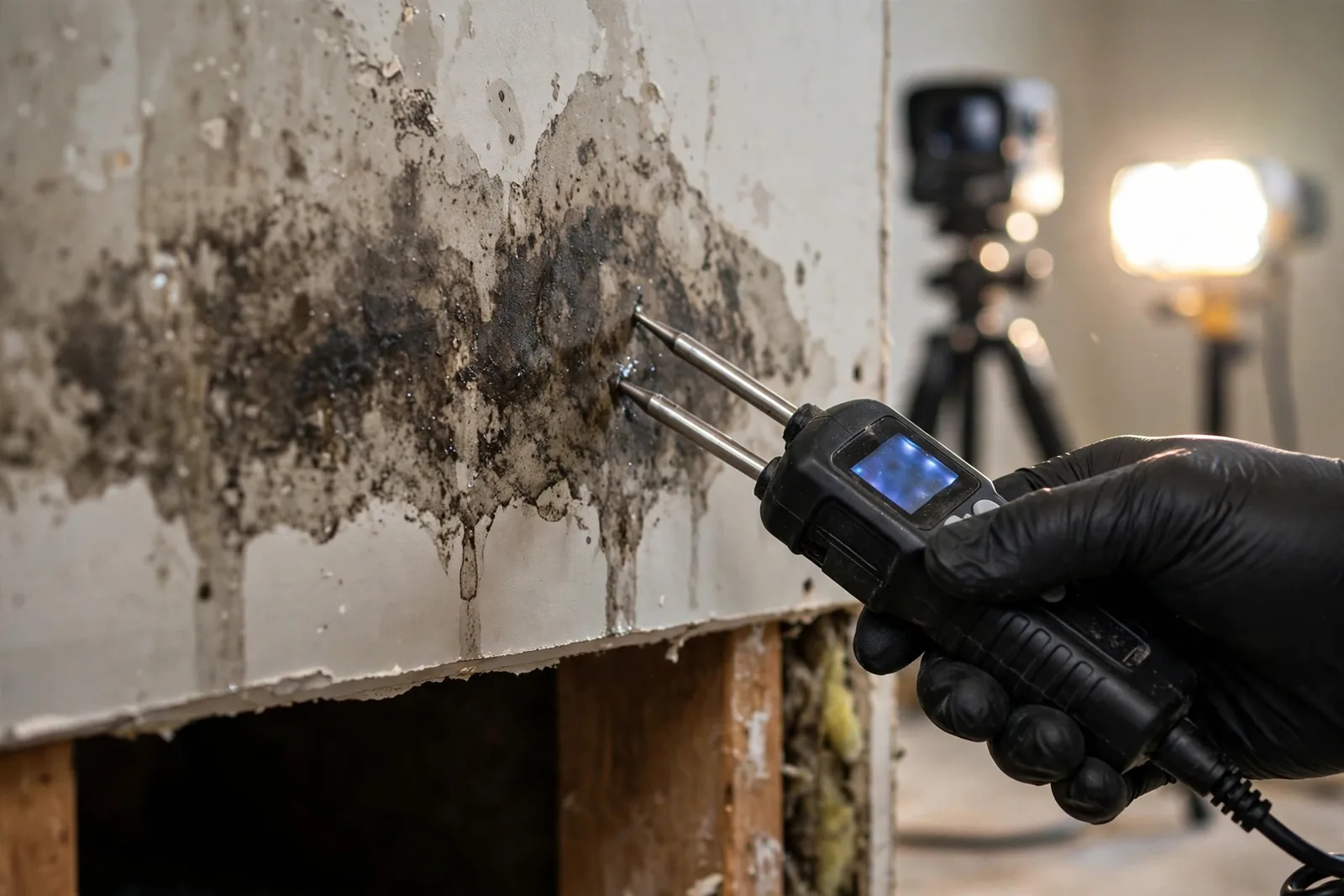
Large spaces dry unevenly, so pros measure rather than assume. Moisture mapping with a moisture meter and a thermal imaging camera marks where water travelled — under vinyl or tile, into partition bases, along a concrete slab. Those marked points become the drying log, read daily until each reaches its dry target.
The equipment matches the space: air movers push evaporation across wide floors, commercial dehumidifiers pull moisture from the air, and desiccant drying may suit larger or cooler premises. Speed matters because mold can begin growing on wet materials within 24 to 48 hours, but proof matters more — reopening over a damp subfloor simply stores up damage behind new finishes.
Deciding When A Business Is Ready To Reopen
Reopening rests on evidence from several directions. The cleanup pro confirms that contaminated material is out, surfaces are treated and moisture readings sit at dry targets. Alongside that, local officials are the deciding reference for matters in their hands — building and fire safety, and food safety for premises that serve food — and an insurer may want the documented record before stock and fittings return.
General practice is to reopen in the same phases the cleanup used, bringing each area back as its evidence clears rather than betting the whole premises on one date. If your business is flooded, call (800) 555-0100. One free call connects you with a local pro who can arrive in 30–60 minutes in the cities served, map the damage and set out a phased plan for getting you trading again.