Why Is My Basement Flooding?
Reviewed By Hamza 8 Min Read
Quick Answer
Basements flood because water under pressure finds the lowest room in the house. The usual causes are rainwater draining towards the foundation, groundwater seepage through the floor and walls, a failed sump pump, drains or sewage backing up, and leaks from pipes and appliances inside the home. Each cause leaves a different pattern.
A basement floods for a findable reason. Water follows gravity and pressure, and it enters through a short list of routes: over the ground, through the walls, up through the floor, back up the drains, or out of the home's own pipes. Working out which route your water took is the whole diagnosis — and it decides the fix.
Why Does Water End Up In The Lowest Room Of The House?
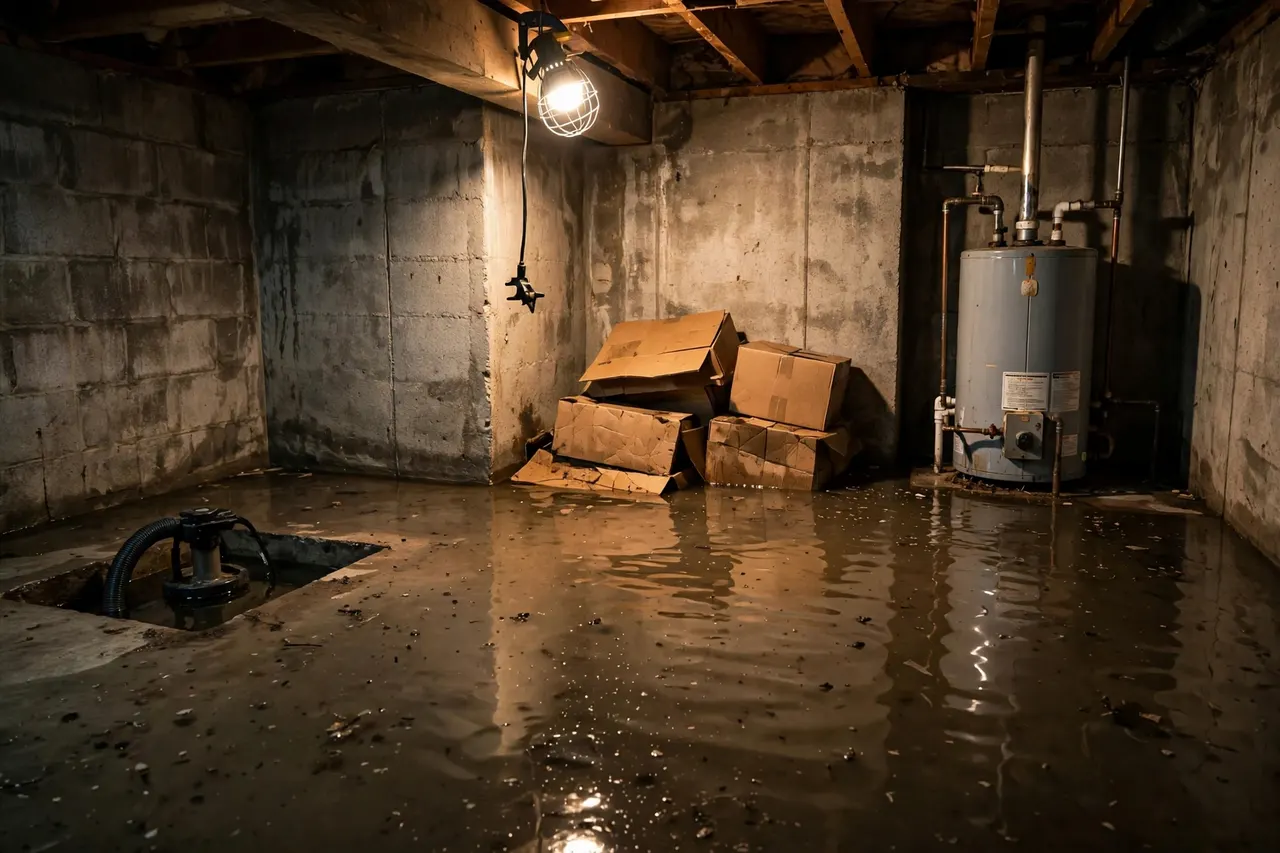
Water ends up in the basement because it is the lowest enclosed space in the home, wrapped in soil on most sides — unlike a Crawl Space, it sits below ground level. Everything the ground cannot absorb presses against those walls and under the floor. Concrete looks solid but is porous, and every basement has joints, cracks and pipe penetrations where water can pass once pressure builds.
That is why basements flood in houses that sit nowhere near a river. Rain alone, absorbed into the soil around the foundation, is enough. The question is never really why water wants in — pressure answers that — but which opening let it through this time, and whether that opening is new, worsening or simply overwhelmed.
Could Rain And Surface Water Be Getting In?
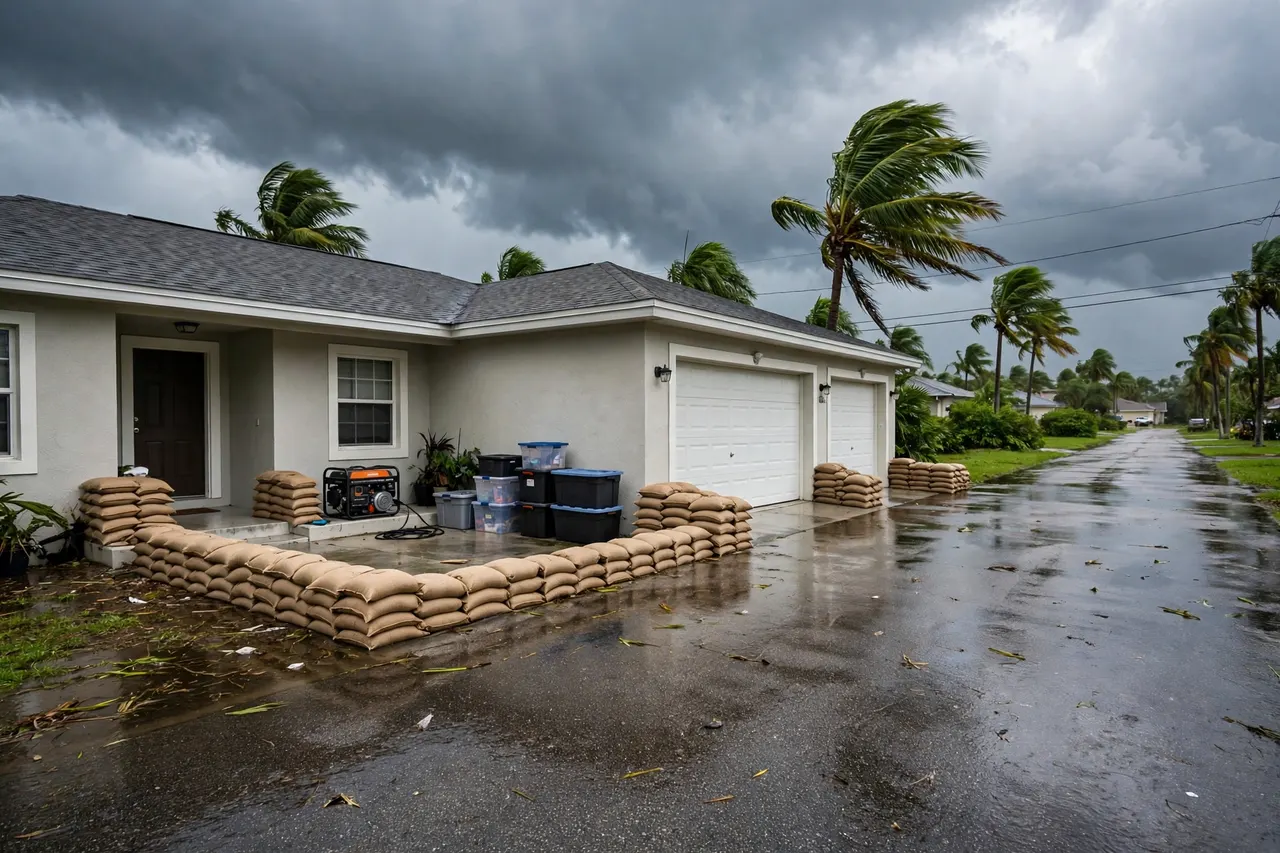
Yes — surface water is the most common starting point. Rain that lands on roofs, driveways and yards should be carried away by gutters, downspouts and ground that slopes away from the house. When a downspout discharges beside the foundation, a gutter overflows, or soil has settled so the yard tilts towards the walls, water gathers exactly where the basement is weakest.
The clues are timing and place. Surface-water flooding starts during or soon after heavy rain, often on the wall below the problem gutter or the low corner of the plot. Window wells that fill and spill through the frame belong to this group too. Check outside first: the wettest indoor wall usually sits opposite the wettest outdoor mistake.
Is Groundwater Pushing Through The Floor Or Walls?
Groundwater is the quieter cause. After long wet spells the water table rises, and hydrostatic pressure pushes soil moisture through cracks in the Concrete Slab, the joint where the wall meets the floor, and porous concrete itself. This is groundwater seepage, and it can begin hours after the rain has stopped, which is why some basements flood on a dry evening.
Look for water appearing at the lowest points, damp spreading evenly along the base of walls, and floor coverings lifting or smelling musty between floods. Seepage tends to return whenever the ground stays saturated, so a basement that floods a day after every long storm is usually telling you the water table, not the weather, is the driver.
Groundwater also explains flooding that seems to come from nowhere in the middle of the room. Pressure under the slab searches for the weakest point, which may be a crack around a pipe, a joint in the concrete or a hollow beneath a floor covering some distance from any wall. Owners often blame a leak because the wettest spot sits nowhere near the edges, but a moisture meter usually shows readings rising across the whole slab, not just at one fixture.
Flood Water In Your Home Right Now?
One free call connects you with a local pro near you.
Could A Failed Sump Pump Be Behind The Water?
A failed sump pump floods basements that were dry for years. The pump sits in a pit collecting drainage water from around the foundation and sends it outside. If the motor burns out, the float sticks, the discharge line blocks, or power fails during the storm, the pit overflows and the drainage system delivers water indoors instead of removing it — sump pump failure at the worst possible moment.
Test the pump in dry weather by lifting the float or pouring water into the pit and watching it discharge. A pump that is silent, slow or constantly cycling needs attention before the next storm. Homes that rely on a pump should also think about what happens during an outage, because storms cause both the flood risk and the power cut together.
Are Drains Or A Sewage Backup Causing It?
Drains reverse when the system beyond them cannot cope. During heavy rain, overwhelmed sewers and blocked lines push water back through the lowest opening in the house — usually a basement floor drain, toilet or utility sink. A sewage backup is the most hazardous version: the water carries waste, smells strongly and must be treated as contaminated from the first minute.
The giveaway is direction. Seepage flows in through walls and floors; a backup rises out of drains and fixtures, sometimes when upstairs toilets flush or the washing machine empties. If water is coming up rather than in, stop using plumbing, keep everyone out of the room and treat the cleanup as a contamination job, not a mopping job.
Could The Water Be Coming From Inside The House?
Sometimes the flood never went outside at all. A split supply pipe, a leaking water heater, a washing machine hose or an HVAC condensate line can release large volumes into a basement, in any weather. Internal leaks explain the basement that floods in a dry spell, or the one wet patch that never dries between storms.
Check the obvious sources in order: water heater base and drain valve, appliance hoses and connections, visible pipe runs, and the area under bathrooms above. A meter that keeps turning when nothing is running also points to a hidden leak. Shut off the water at the main valve if a pipe is actively leaking, then deal with the water already down.
How Does A Pro Pin Down The Real Cause?
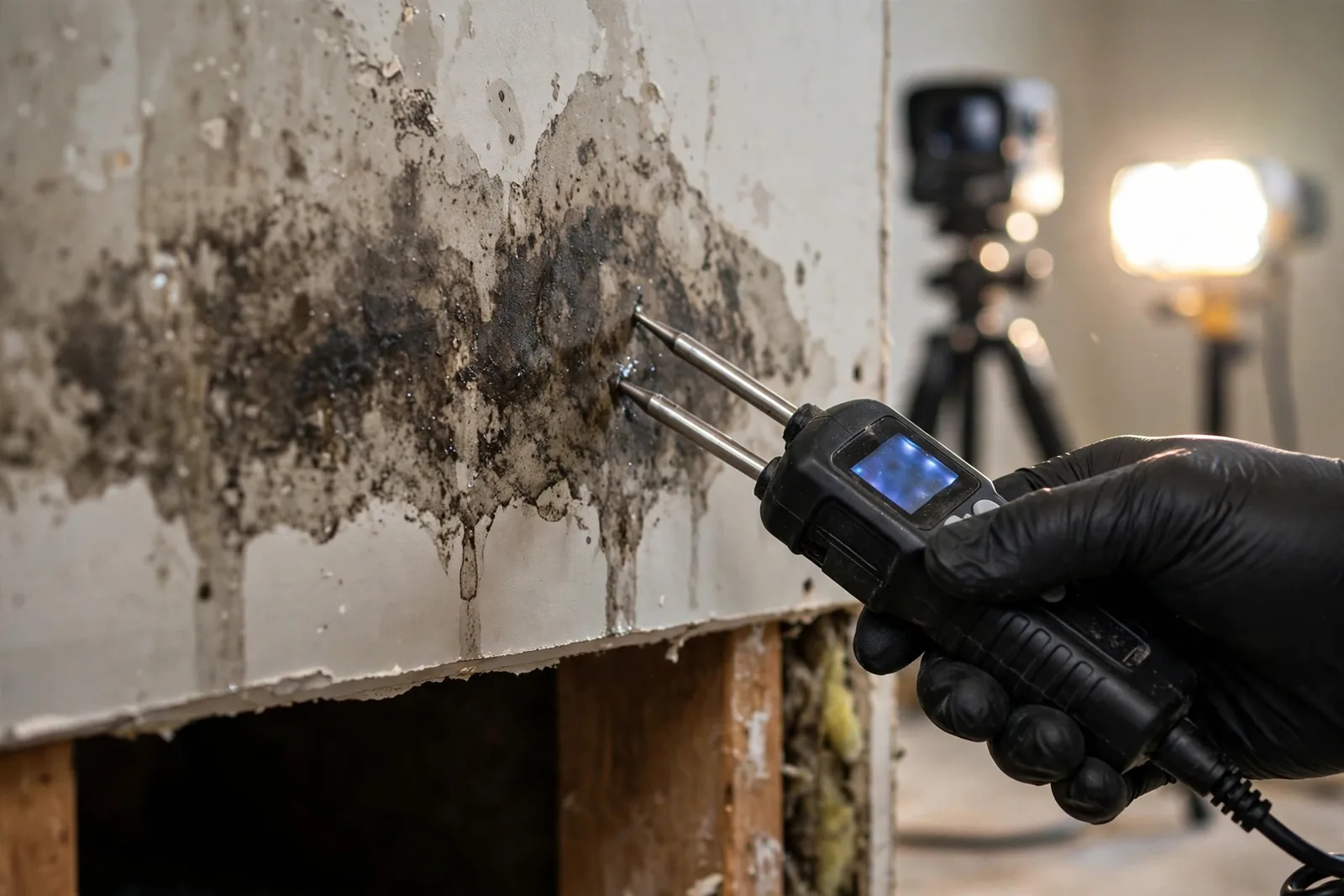
A pro pins the cause down with moisture mapping, not guesswork. Using a moisture meter and often a thermal imaging camera, the pro traces how far water travelled through the slab, walls and each Wall Cavity, then matches that pattern against the weather, the drains, the sump pump and the plumbing. Entry points that look identical to an owner separate clearly under readings.
Once the cause is named, cleanup follows the water: water extraction, removal of soaked materials, antimicrobial treatment where contamination is involved, and structural drying to measured targets. If your basement is flooding now, call (800) 555-0100 — one free call connects you with a local pro who can arrive in 30–60 minutes in the cities served, find the route the water took and stop the damage spreading.