Signs Of Hidden Water Damage After A Flood
Paint blistering low on a wall, baseboards swollen and split, floors soft underfoot, a stale smell cleaning cannot shift — moisture is still inside the structure. Showing up now? The Gonzales emergency flood page sets out the first moves.
What Causes Flooding In Gonzales Homes?
How did a Gonzales home flood? Usually volume: inches of rain on flat ground, ditches and drains full, street water hunting the lowest opening — a garage door, a patio threshold, a low vent. Plumbing failures cause the smaller share of calls.
Which Types Of Flooding Affect Gonzales?
Three kinds do most damage here: riverine flooding as parish waterways rise after long rain, flash flooding when a burst beats drainage within an hour, and drainage flooding where backed-up systems push water towards homes. Storm surge is not among them — Gonzales sits inland.
The 3 Water Categories, And Why Floodwater Is Category 3
Crews grade water in three categories: Category 1 is clean supply water; Category 3 carries sewage, chemicals and bacteria — and all floodwater counts as Category 3 for what it crossed en route. The category sets the gear, the sanitizing and what is thrown out.
What Floodwater Carries Into A Home
Floodwater crossing Gonzales picks up motor oil from roads, chemicals from garages and yards, fertiliser, bacteria and — where drains surcharge — raw sewage. That load is why soaked insulation and carpet pad cannot be dried and kept, and why framing gets treated.
How Pros Find Hidden Flood Water
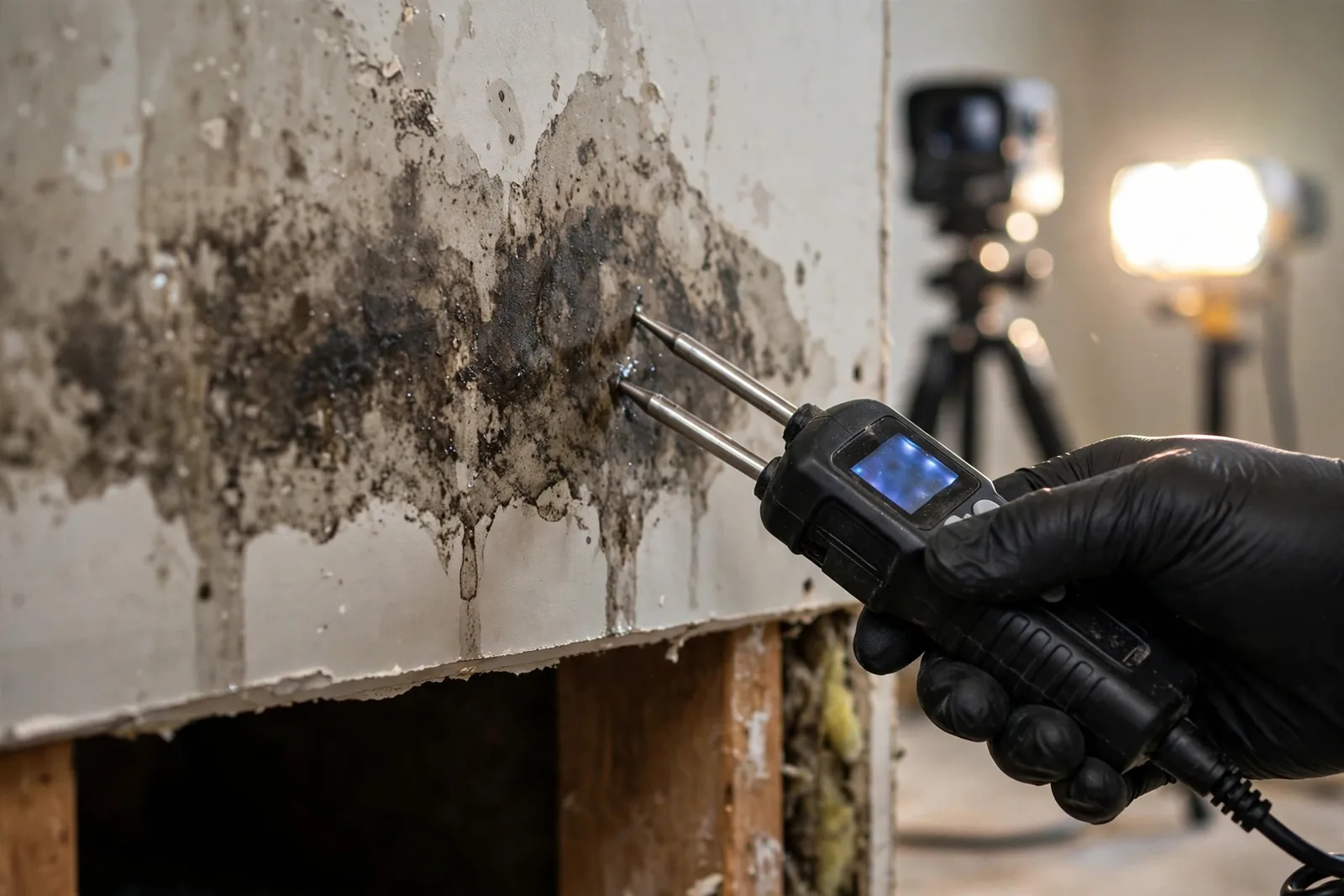
Pros do not guess where water went. The inspection moves room by room, meters pressed to floors and wall bases, readings plotted as moisture mapping — a picture of how far water travelled behind finished surfaces. That map drives the drying plan.
How Thermal Imaging Finds Moisture In Walls
Evaporating water cools a surface; a thermal imaging camera turns that cooling into a visible pattern. Pros sweep walls and floors to flag suspect patches fast, then confirm each one with a meter before discussing opening a wall.
Where Flood Water Hides In A House
The hiding places are predictable: wall cavities behind sound-looking drywall, beneath laminate and vinyl plank sealing the subfloor, inside insulation, and the dead space under kitchen cabinets. A room can feel dry while every pocket stays wet.
What Happens First When A Pro Arrives?
Before pumping, the pro walks the home with you: is power safe, how contaminated is the water, which rooms can be entered? Floodwater and electrics are a dangerous mix, so the safety assessment comes first; findings and the work order follow.
How Standing Flood Water Is Removed
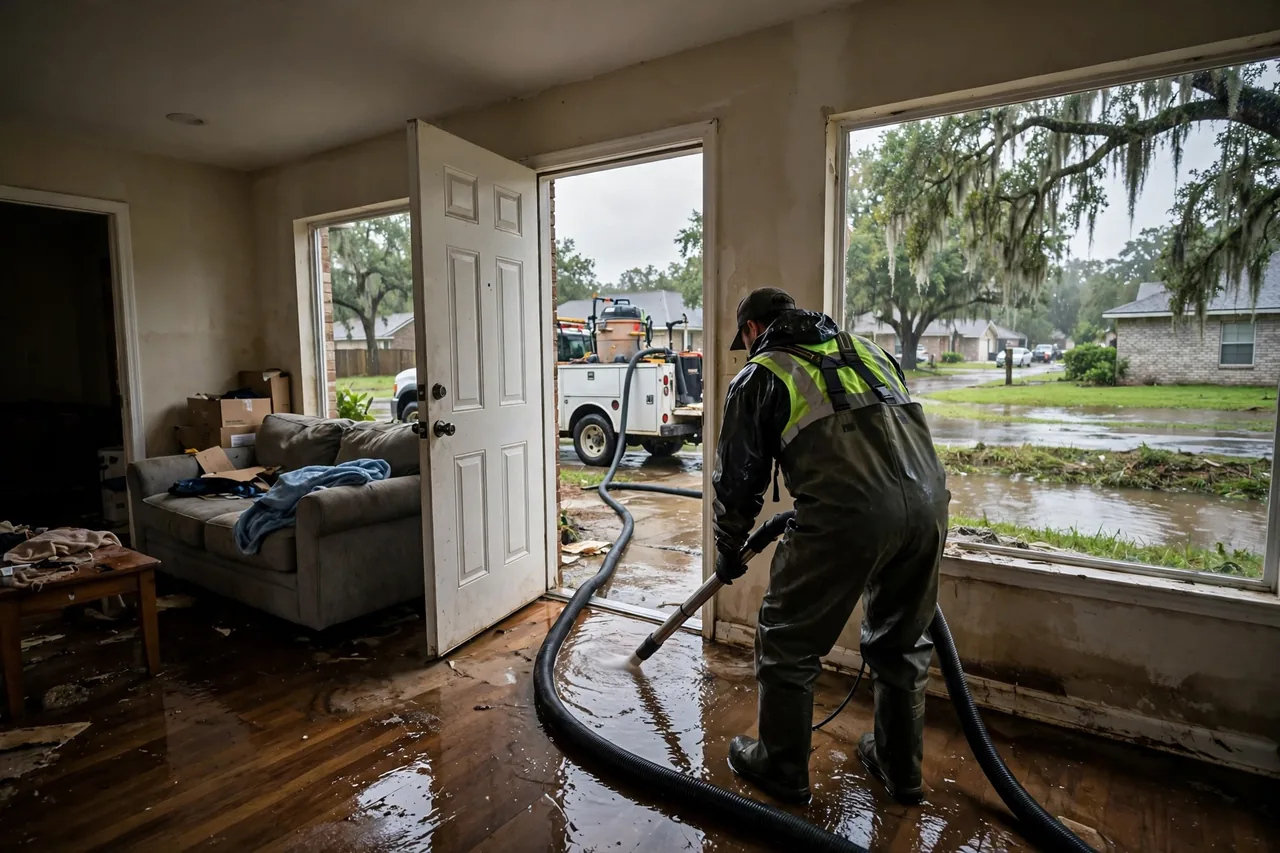
Depth leaves first via submersible pumps. The remainder is pulled from carpet, tile and hard floors by a truck-mounted extraction unit and wands, room by room towards the door. Every gallon removed mechanically is one drying need not evaporate.
How Mud, Silt And Debris Are Cleaned Out
Floodwater drops its load as it recedes: silt and mud filmed over hard floors, grit in corners, debris where the current slowed. Crews shovel and wash it out before it dries into contaminated dust. Gonzales sediment is street and ditch material — treated as contaminated regardless.
Why Crews Cut Drywall After A Flood
Drywall drinks floodwater and wicks it above the visible line; insulation behind holds it against the framing. A flood cut removes that damaged band so the cavity can be cleaned, treated and dried — and makes the later repair neater.
One free call connects you with a local pro near you.
How A Home Is Sanitized After Flooding
With contaminated material out, framing and hard surfaces are washed and given an antimicrobial treatment. Odours are traced to source material rather than masked, and HEPA air scrubbers run through drying, filtering particles the work stirs up.
How Structural Drying Works
Air movers push air across wet surfaces; a dehumidifier strips that moisture from the air. Readings are logged daily against dry targets until each material passes. The guide to water remediation shows where drying sits in the full process.
What Happens To Furniture And Belongings?
Belongings are sorted during a contents evaluation, piece by piece: hard items often clean and stay; mattresses, carpet pad and soaked soft furnishings usually cannot be made safe. Keepable items leave through a contents packout — inventoried, packed, stored clear of work.
What Repairs Happen After Cleanup And Drying?
No repair starts until the drying log confirms the structure is dry. Then: new insulation and drywall, baseboards refitted, flooring and cabinetry repaired, redecorating last. Sealing new material over damp framing locks moisture in — and the repair fails from behind.
How Long Cleanup And Drying Take, Phase By Phase
Extraction takes hours, not days. Stripping ruined material usually follows within a day; structural drying runs several days under daily checks; repairs come last. Depth, materials and how soon work began stretch or shorten each phase.
Documenting Flood Damage For An Insurance Claim
Photograph every room before anything is touched, waterline included, and keep shooting as work proceeds. Keep moisture map, drying log, invoices and emergency receipts together. Louisiana's claim rules sit on the Louisiana flood water cleanup page — documentation is the claim element fully in your hands.
What Can Be Saved, And What Must Be Removed?
Porosity draws the line. Concrete, tile, metal and solid wood usually clean up well; drywall, insulation, carpet pad and particleboard cabinetry absorb contaminated water deep inside and usually go. Food, medicine and cosmetics touched by floodwater are always discarded.
Drywall, Insulation And Flooring, Material By Material
Material by material: drywall wicks and is cut out; insulation holds water and comes out; hardwood can cup drying unevenly; laminate and vinyl plank look sound while sealing water against the subfloor; carpet pad always goes, carpet is judged on readings.
What Makes Gonzales Flood-Prone?
The recipe: 69.96 inches of rain a year on ground at 7.6 feet with no slope to drain it, plus a parish riverine risk score of 99.43. FEMA flood maps detail the mapped-risk streets; the Geismar flood water cleanup page shows the same parish picture nearby.
What The Sourced Local Numbers Say
The sourced picture: Ascension Parish averages 69.96 inches of rain a year (NOAA, 2015–2024); FEMA scores it 99.43 riverine, 96.77 hurricane and 83.1 coastal (NRI, March 2023); 29.9% of city homes predate 1980 (ACS 2024). Flooding here recurs — it is not a remote risk.
Garages, Ground Floors And First Floors After Flooding
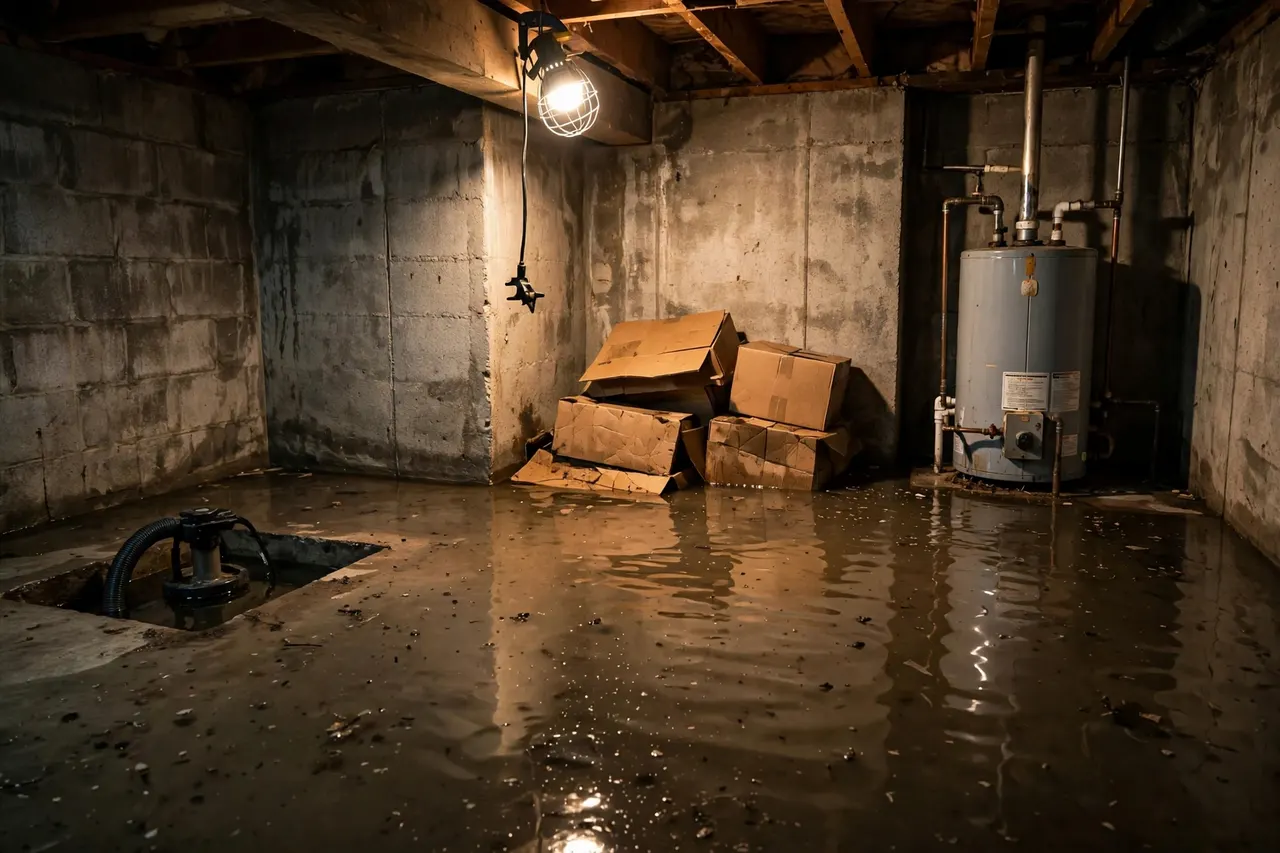
Garages flood first: the water mixes with vehicle fluids and stored chemicals, and silt settles over the slab. Cleanup extracts it, removes contaminated stored items, washes slab and shared walls, and dries them. The mold prevention guide covers the adjoining rooms.