Flood Cleanup: What You Can Do Yourself And What Needs A Pro
Reviewed By Hamza 8 Min Read
Quick Answer
The safe DIY share of flood cleanup is the dry work: photographing damage, moving undamaged belongings, and keeping people clear of the water. Anything involving contaminated water, soaked walls, floors and insulation, electrics, or drying to measured targets needs a pro with extraction and moisture-mapping equipment.
Doing some of a flood cleanup yourself is reasonable. Doing all of it, after water has come in from outside, usually is not — not because homeowners lack effort, but because flood water is contaminated and the damage hides where household tools cannot measure it. This guide draws the line task by task, so you can do the safe parts well and hand over the rest in time.
Where Is The Line Between Safe DIY And Pro Work?
The line sits where water meets contamination and hidden structure. Tasks on your side of it involve dry belongings, records and observation: photographing rooms, moving undamaged items out of wet areas, and keeping people and pets clear. Tasks on the pro side involve the water itself, the materials it soaked, and any judgement about what can stay or must be removed.
A simple test helps. If a job needs you to touch flood water, cut into a wall or floor, or decide whether a soaked material is safe to keep, it is pro work. If it can be done from a dry doorway with clean hands, it is usually safe to do yourself, and it genuinely helps the crew that follows.
What Can You Safely Do In The First Hours?
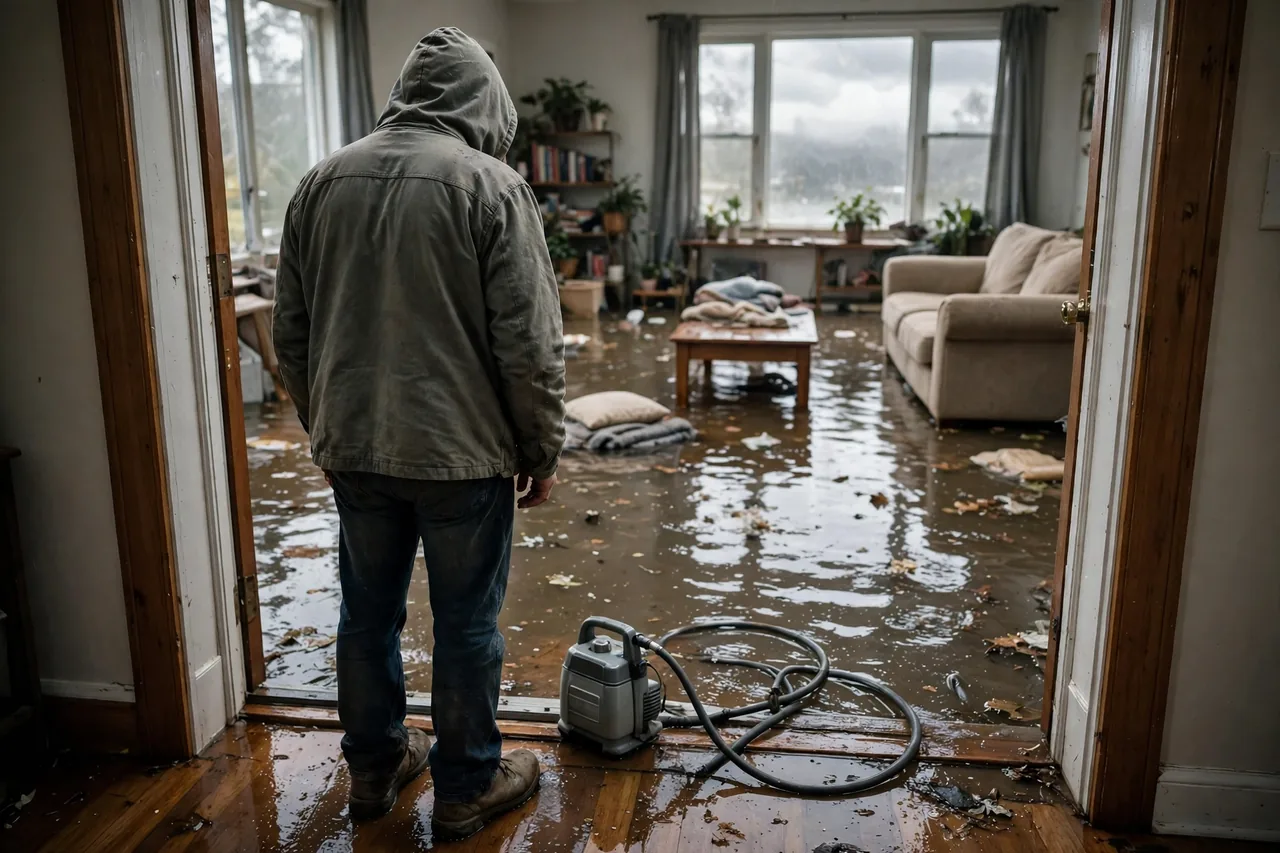
Start with safety you control. Keep everyone out of flooded rooms, and switch off power to those rooms only if the panel can be reached from somewhere dry — never by wading. Move medicines, documents and dry belongings to an upper floor or a dry room if you can reach them without crossing deep water.
Then document. Photograph every room from the doorway, the water line on the walls, and damaged belongings where they sit. Open windows in dry weather can help air a home once water has gone, and gentle mopping of a thin film of clean rainwater on a hard floor is reasonable. Beyond that film, stop: standing water from outside is where the DIY list ends.
Which Jobs Look Simple But Are Not Safe To Do Yourself?
Several jobs look like ordinary housework and are not. Pulling up carpet feels like labour, but flood-soaked carpet pad holds contamination against skin and lungs as it is dragged out. Cutting drywall looks like demolition, but a wall cavity can hold water and wet insulation that spill out when opened. Even shovelling silt and mud is exposure work once that silt arrived with flood water.
Electrics are the sharpest example. Water around outlets, an electrical panel, a water heater or an HVAC system is never a DIY clean-up area. Leave the room alone, keep others out of it, and let the emergency assessment decide how that part of the home is made safe before any cleanup begins there.
Why Does Contaminated Water End Most DIY Cleanup?
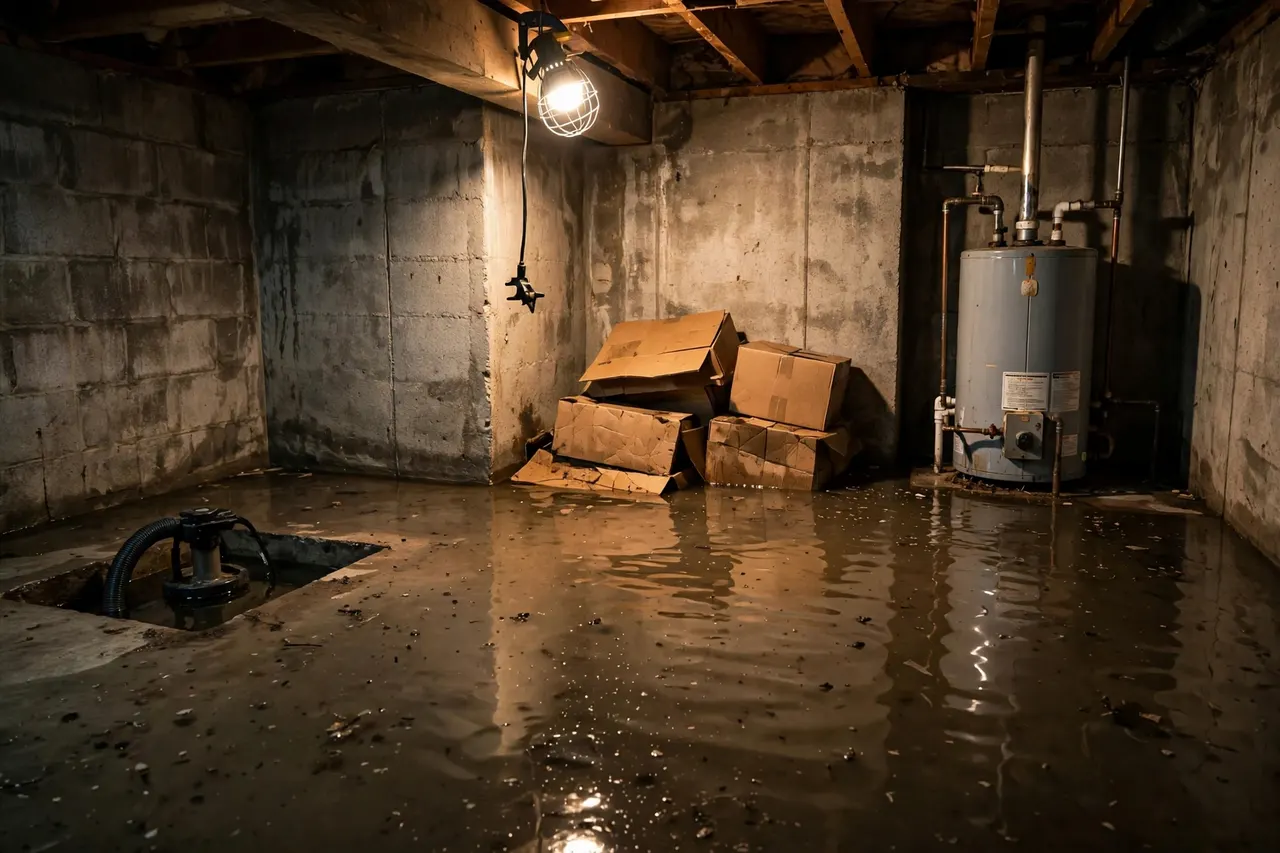
Flood water is treated as Category 3 water, the most contaminated category, because of what it collects crossing streets, yards, drains and fields: soil, fuel, fertiliser and sewage. That classification changes everything about the work. Porous materials that soaked it in — carpet pad, insulation, upholstery, drywall — cannot be cleaned back to safe; they are removed.
Flood Water In Your Home Right Now?
One free call connects you with a local pro near you.
Sewage backup makes the point clearest, but the rule applies to ordinary street flooding too. A homeowner with a mop and shop-bought disinfectant can clean a hard surface; no home method cleans the inside of a soaked sofa or the back of a sheet of drywall. Remediation is removal, cleaning and antimicrobial treatment in the right order, and removal is the step DIY cannot shortcut.
What Equipment Gap Makes Home Drying Fall Short?
Drying is where the equipment gap is widest. A pro arrives with extraction machinery, air movers placed from a moisture map, dehumidifiers sized to the loss, and sometimes desiccant drying for large or salt-water jobs. Household fans move damp air around a room; they do not pull moisture out of a subfloor or dry a wall cavity to a target.
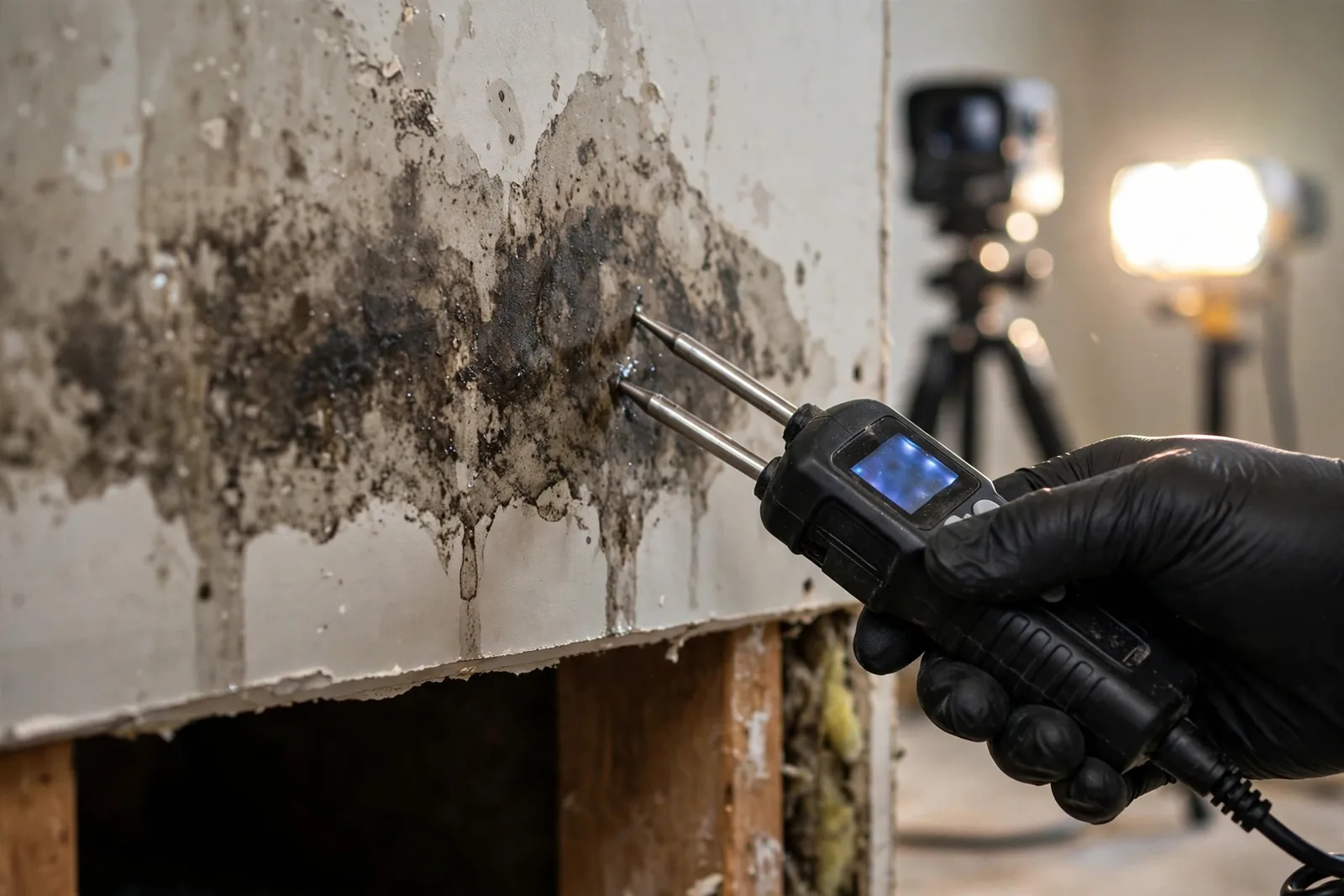
Measurement is the other gap. Structural drying runs on a moisture meter and a thermal imaging camera, with readings logged daily until framing, subfloors and slabs reach dry targets. Without those readings, a homeowner is judging by touch and smell, and both say "dry" long before the structure actually is. Mold can begin within 24 to 48 hours, so a slow, unmeasured dry is a risk, not a saving.
Which Belongings Can You Handle Yourself, And Which Should You Leave?
Handle dry and hard things yourself. Belongings from rooms the water never reached can be boxed and moved, and a contents packout starts faster when you have already listed what matters most. Hard items a flood touched — metal, glass, sealed plastic — can be set aside for washing and disinfecting once the home is safe to work in.
Leave soaked soft furnishings alone. Mattresses, pillows, upholstered furniture and soft toys that sat in flood water are usually discarded for health reasons, and moving them spreads contamination through clean rooms. Photograph them in place for your records, note them on your inventory, and let the crew confirm what goes during the packout.
How Do You Decide Before Spending Money Either Way?
Decide on the water's source and spread, not on optimism. Clean water, a small area, hard floors and no wall contact: DIY with careful drying and a follow-up moisture check is a defensible choice. Water from outside, more than one room, soaked carpet, or any sewage sign: the pro route protects the home, the claim record and your health at once.
You do not have to make that call from a flooded doorway. Call (800) 555-0100 — one free call connects you with a local pro who can arrive in 30–60 minutes in the cities served, measure what the water actually did, and tell you plainly which parts you can finish yourself.