Flood Cleanup For Condos And Townhomes: Who Handles What
Reviewed By Hamza 8 Min Read
Quick Answer
In a condo or townhome, cleanup duties are usually split: the association looks after shared parts of the building, while each owner looks after the inside of their own unit. The exact split sits in the building's governing documents, so start extraction and drying in your unit, notify the association in writing, and let the documents settle the rest.
A flooded condo or townhome raises a question a detached house never does: whose job is this part? Water crosses floors, ceilings and shared walls, while responsibility stops at lines drawn in documents. This guide explains the usual split, in plain words.
Who Handles Flood Cleanup In A Condo: Owner Or Association?
The short answer is usually both, each for a different part of the building. Owners generally handle cleanup inside their own unit, and the association generally handles shared areas and shared building parts. Neither side should wait for the other before acting on its own part.
The exact line varies from building to building. It is set by the community's governing documents and any master policy the association holds, not by habit or by what a neighbour's building does. If the split is unclear, get drying started where you clearly are responsible, and ask the association or its manager to confirm the rest in writing.
Which Parts Of A Condo Building Are Usually Shared?
Shared parts commonly include hallways, stairwells, lobbies, parking areas, the roof, exterior walls and the building systems that serve everyone. Shared pipes, the building Electrical Panel, the shared HVAC System and structural elements often sit on the association side of the line as well. Flood water in those areas is normally reported to the association straight away.
Townhomes sit somewhere in between. A townhome owner may own more of the structure than a condo owner does, yet still share a wall, a roof line or drainage with the next home. The documents for that community, rather than the building style alone, decide where one owner's duty ends and the shared duty begins.
What Happens Inside Your Own Unit After A Flood?
Inside your unit, the work follows the same sequence as any flooded home: standing water is extracted, ruined porous materials are removed, surfaces that stay are cleaned and treated, and the structure is dried to measured moisture targets, once a Contents Packout has cleared belongings from the wet rooms. Flooring, cabinetry, belongings and the inside faces of walls are typically the owner's side of the job.
Speed matters more than the paperwork. Mold can begin growing on wet materials within 24 to 48 hours, and shared walls keep passing moisture while people debate duties. Photograph everything, start the unit work you are responsible for, and keep invoices and the drying log for whoever needs them later.
How Does Water Moving Between Units Change The Cleanup?
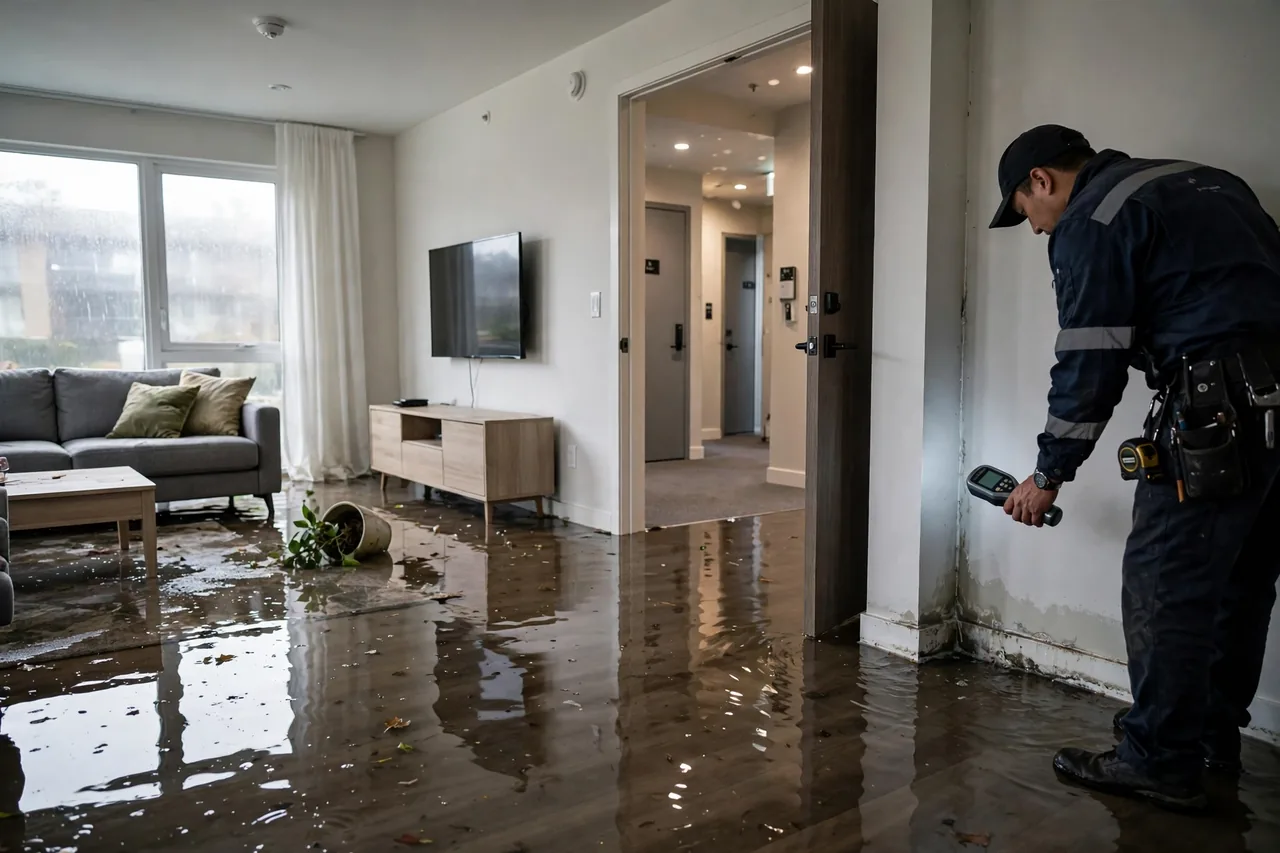
Water does not respect unit boundaries. A flood on an upper floor can soak the ceiling and wall cavities of the home below, and a ground-floor flood can wick into shared walls on both sides. Cleanup therefore has to be coordinated: drying one side of a wet shared wall while the other side stays soaked rarely holds.
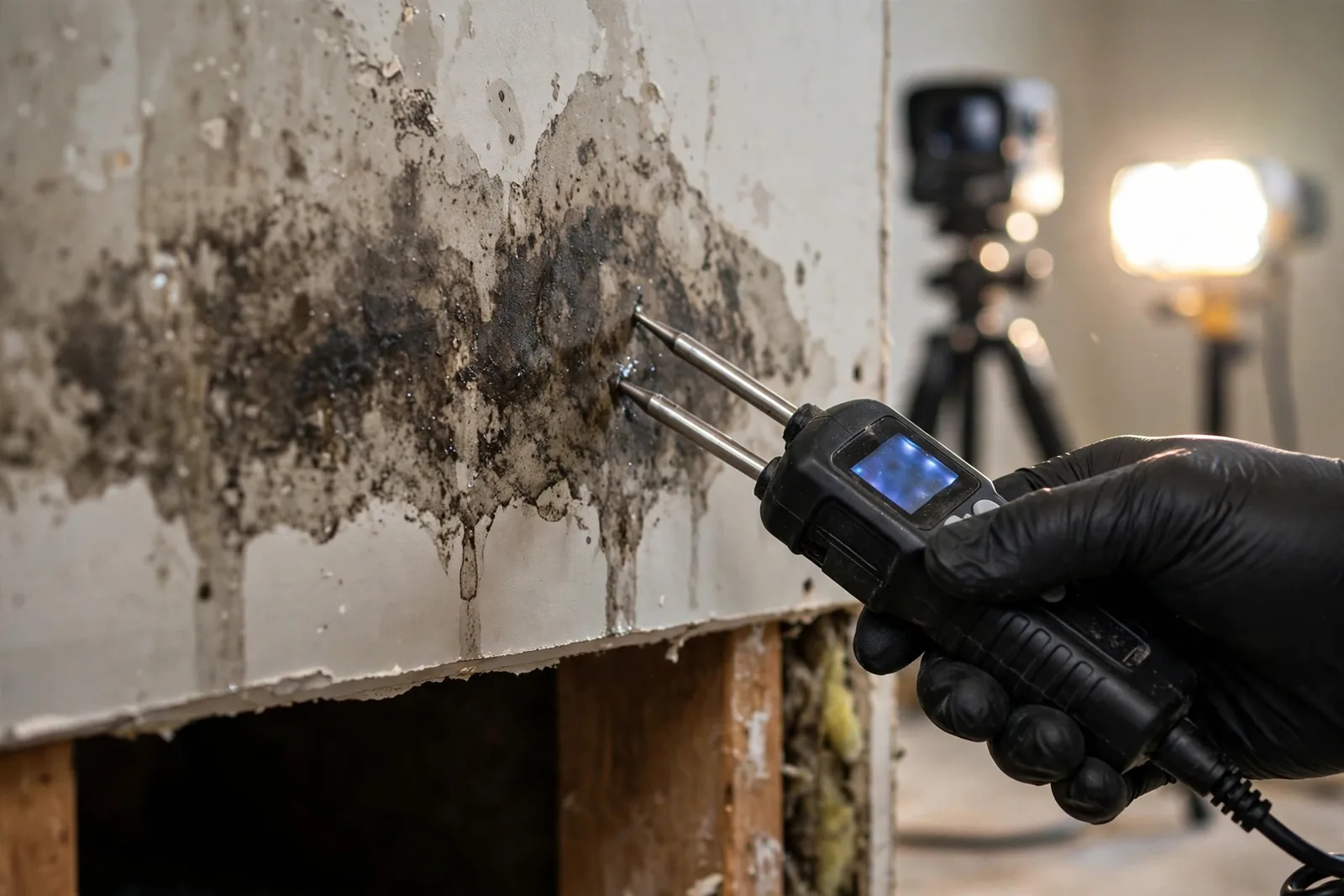
A pro uses a moisture meter and thermal imaging to follow water across those boundaries before deciding what to open or remove. Tell the pro which neighbouring units were affected, and expect the association to be part of the conversation when shared cavities, shared plumbing or structural parts are involved.
Flood Water In Your Home Right Now?
One free call connects you with a local pro near you.
What Should You Tell The Association And Your Neighbours First?
Notify the association or its manager as soon as you can, in writing where possible, and describe where water entered, which rooms are wet and whether shared areas are affected. Tell neighbours below and beside you as well, so they can check ceilings and walls early rather than discovering stains later.
Keep the message factual: times, photos and what a pro has found so far. Early notice protects everyone, because hidden moisture found on the first day is far simpler to dry than moisture found after odours and mold appear. It also creates the paper trail that later questions about duties will rely on.
How Do Separate Flood Policies Fit Into Condo Cleanup?
Condo buildings often involve more than one policy: a master policy held by the association for shared parts, and a policy held by each owner for their own unit and belongings. Which policy responds to a given room or material depends on the documents and the policy wording, so read both rather than assuming.
Standard homeowners cover usually does not pay for damage from outdoor flooding, while a separate flood policy, such as one through the National Flood Insurance Program (NFIP) run by FEMA, is the route for flood damage. Keep photographs, the drying log and receipts from the first day, and ask each policy contact what records they need before material is removed.
How Does Drying Work When Walls And Floors Are Shared?
Structural drying in a condo uses the same tools as in a house — air movers, dehumidifiers and daily moisture readings — with added coordination, plus a Containment Barrier at a doorway opening onto a shared hallway. Equipment may need to run in two adjoining units at once, access may depend on a neighbour's schedule, and noise or hallway access may be covered by building rules worth checking early.
Drying is finished by measurement, not by feel. Readings at marked points should reach their targets on both sides of a shared wall before it is closed up again. A pro who explains those readings, and shares them with the association where shared parts are involved, helps prevent a second round of work later.
What Records Help When Duties Are Disputed?
Good records settle most disagreements. Keep dated photographs of every affected room, the written notice you sent the association, the pro's moisture readings and drying log, and every invoice split by unit work and shared-area work. Note who agreed to what, and when, while memories are fresh.
If a dispute continues, the governing documents and the two policies are the references that matter, and the association's manager is the first place to take the question. If your condo or townhome has flooded and the split is still unclear, call (800) 555-0100 — one free call connects you with a local pro who can arrive in 30–60 minutes in the cities served and start with the rooms that are plainly yours.