Flooded Crawl Space: What To Do
Reviewed By Hamza 8 Min Read
Quick Answer
A flooded crawl space is cleaned by extracting the standing water, clearing silt and mud, removing soaked insulation and damaged vapor barrier, treating the framing, and drying the space to measured moisture targets. Do not crawl under the house yourself: flood water there is contaminated, and the space often holds electrical and HVAC hazards.
A flooded crawl space is out of sight, which makes it easy to underestimate. The water under your home is sitting against the framing, insulation and soil that your floors rest on — and it will not dry out quickly just because the rooms above feel fine.
How Do You Clean And Dry A Flooded Crawl Space?
The work runs in order: make the space safe to enter, extract the standing water, remove ruined materials such as soaked insulation and damaged vapor barrier, clean and treat the framing, then dry the space to measured moisture targets. Each stage depends on the one before it — drying a space that still holds wet insulation and mud underneath it does not work.
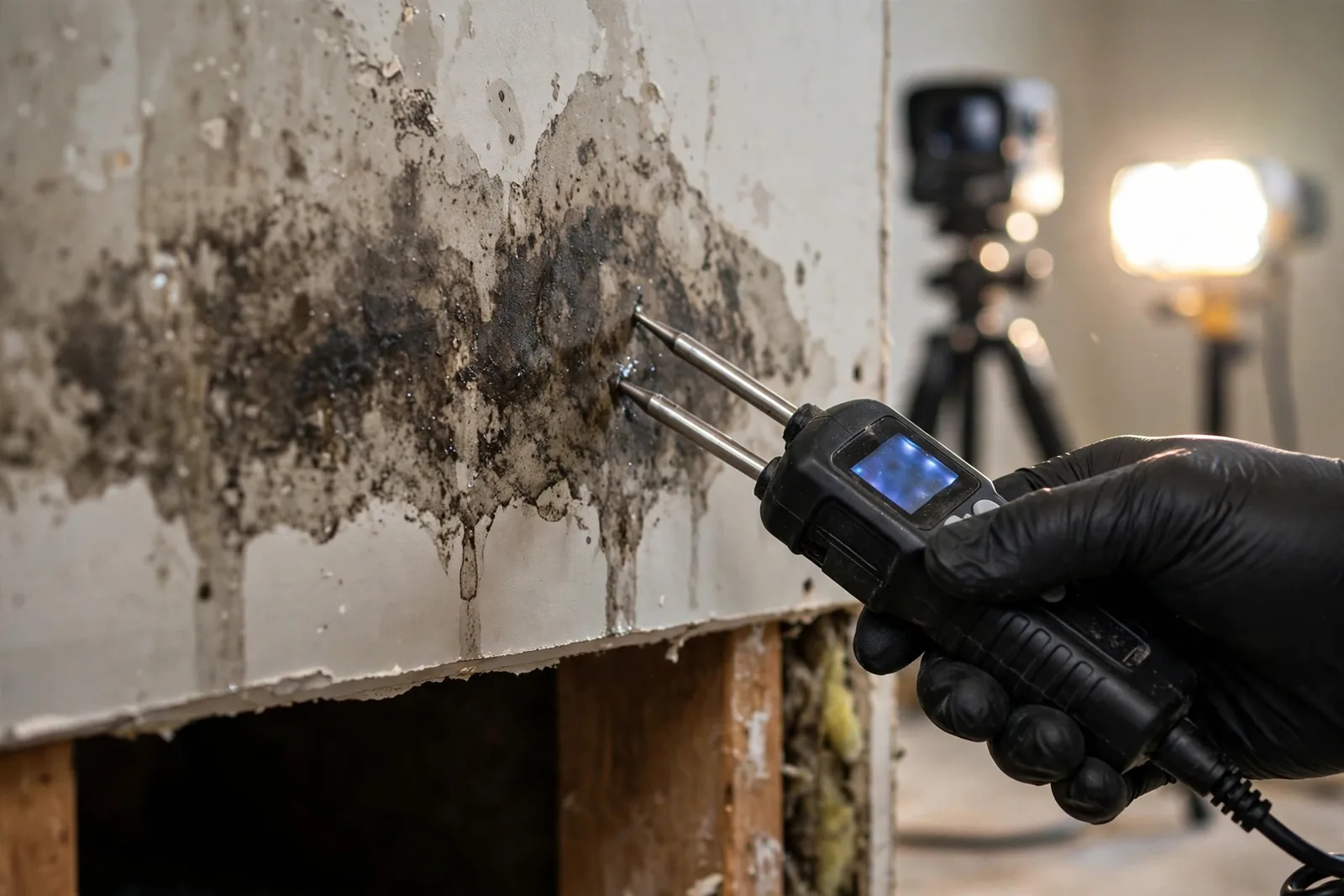
Pros confirm the finish with a moisture meter, reading joists, the sill plate and the underside of the subfloor at marked points until they reach dry levels. That measured finish, recorded in a drying log, is what separates a dried crawl space from one that merely looks dry at the entrance.
Why Does Crawl Space Water Matter If Living Rooms Stayed Dry?
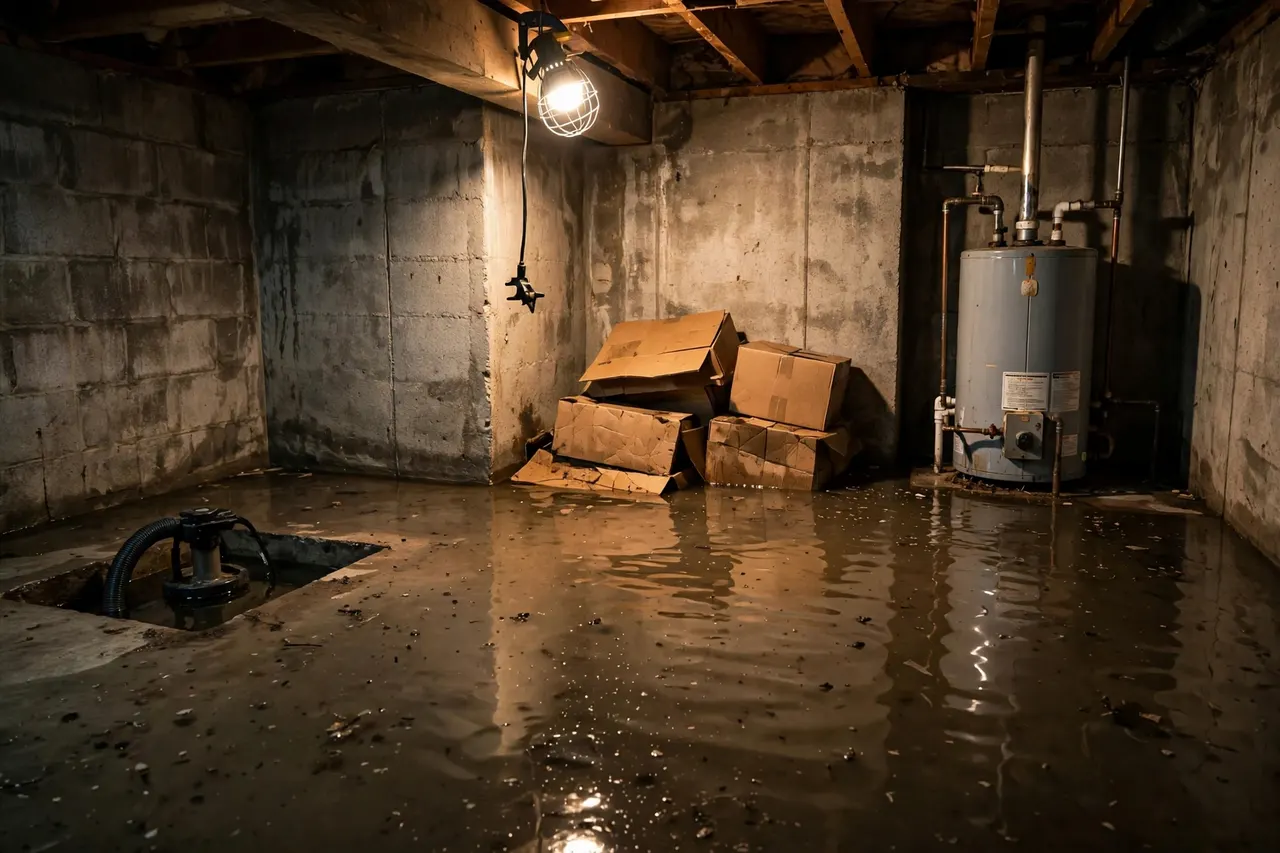
Because the crawl space is part of the structure. Water there soaks the insulation fitted between joists, wets the framing that carries the floor, and saturates the soil, which then keeps releasing moisture upward for weeks. Damp rising from below can warp flooring, feed mold on the underside of the subfloor, and leave a musty smell that drifts into the rooms above.
Flood water under a home is also treated as Category 3 water, the most contaminated category, because it has flowed across ground, streets and drains on its way in. Silt and mud left behind carry that contamination against the piers and framing. Leaving it in place is not a neutral choice.
What Should You Do Before Anyone Goes Under The House?
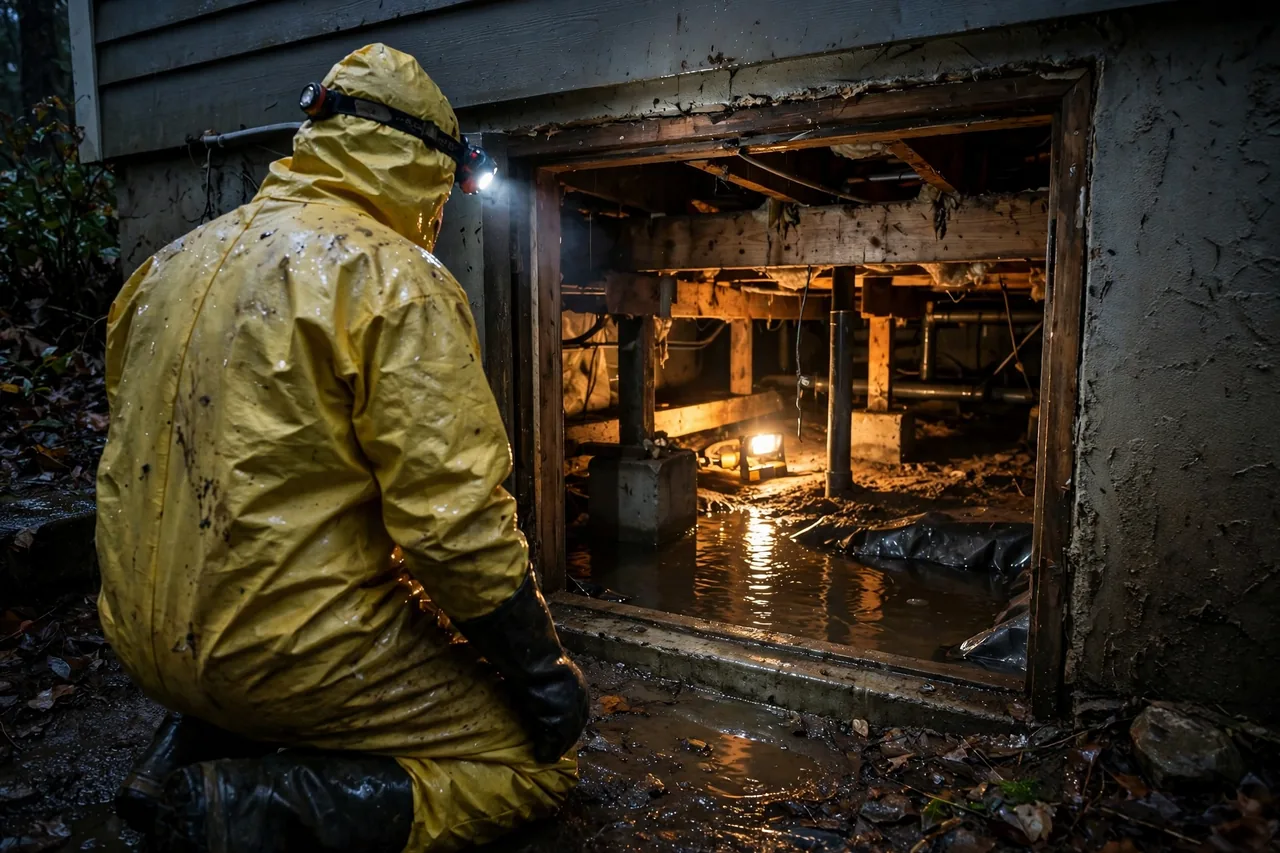
Treat the space as hazardous until it has been checked. Do not crawl under the house yourself: headroom is low, water can hide debris and sharp objects, electrical lines and the HVAC system may run through the space, and flood water is contaminated. Keep children and pets away from the access hatch and vents.
From outside, you can still help. Photograph the access area and any visible water line or silt for your records, and note smells or displaced soil. If you can safely switch off power to equipment under the home from a dry panel inside, do so. Then call a pro — the first visit starts with a safety assessment before anyone enters.
How Is Standing Water Removed From A Crawl Space?
A submersible pump placed at the low point does most of the work, discharging through a hose routed out through the access or a vent opening, away from the foundation so the water does not soak straight back in. Where water is shallow or broken into pockets by the ground's shape, crews reposition the pump and remove the last of it by hand equipment.
Flood Water In Your Home Right Now?
One free call connects you with a local pro near you.
Once liquid water is out, silt and mud are cleared from around piers and along the low areas. Mud is more than a mess: it holds contaminated moisture against the ground and framing, slows drying, and hides the true condition of the soil and vapor barrier underneath it.
What Has To Come Out Of A Flooded Crawl Space, And What Can Stay?
Soaked insulation is the main removal. Wet fiberglass batts hold water against joists and subfloor, lose their insulating value, and rarely dry in place in a dark, still space. A torn or silt-buried vapor barrier usually comes out too, to be replaced once the ground is dry. Debris, stored items and anything organic the water carried in also go.
What stays is the structure itself. Piers, beams, joists and the sill plate can normally be cleaned, given antimicrobial treatment and dried in place, once the materials trapping water against them are removed. A pro checks each element with moisture readings and flags any wood that is damaged rather than merely wet.
How Is A Crawl Space Dried, And How Is Dryness Checked?
Structural drying under a home combines air movement with dehumidification sized for a confined space. Air movers push drier air across wet framing and soil, while a dehumidifier pulls the released moisture out of the air so it cannot simply settle back onto the wood. In larger or very wet spaces, desiccant drying may be used instead.
Dryness is proved by readings, not by feel. The pro takes moisture meter readings at the points marked during the initial moisture mapping — joists, sill plate, subfloor underside — and logs them daily until every point reaches its target. Only then are insulation and a new vapor barrier fitted, so moisture is not sealed in beneath fresh material.
The soil itself is usually the last part to dry. Saturated ground keeps releasing moisture into the crawl space air long after the framing has reached target, which is why drying equipment sometimes runs longer under a home than the rooms above seemed to need. Ending drying early because the entrance area feels dry is a common mistake: the low, still centre of the space is the last place to give up its moisture, and readings there decide the finish.
How Can You Spot Crawl Space Flooding Earlier Next Time?
Learn your home's early signals: a musty smell that appears after heavy rain, floors that feel cooler or slightly soft in one area, and water lines or silt visible at the access hatch. A simple water alarm placed at the low point of the crawl space can warn you while water is still shallow and extraction is straightforward.
The cheapest check is a look through the access after any flood or major storm, from outside the opening, with a torch — water and silt are easy to see before they announce themselves upstairs. If you find water under your home, call (800) 555-0100 — one free call connects you with a local pro who can arrive in 30–60 minutes in the cities served.