How To Clean A Flooded Basement
Reviewed By Hamza 9 Min Read
Quick Answer
Clean a flooded basement in this order: make it safe and photograph everything, pump or extract the water out, remove silt, mud and ruined porous materials, wash hard surfaces clean, then disinfect and treat them, and finally dry the space with air movers and a dehumidifier until moisture readings reach dry targets. Disinfecting before washing, or rebuilding before drying is proved, are the two mistakes to avoid.
Cleaning a flooded basement works when it follows one order: make the space safe, get the water out, remove what the water ruined, wash and disinfect what stays, then dry everything to a measured finish. Skipping ahead — disinfecting before washing, or drying before removing debris — is what makes basement cleanups fail.
Is It Safe To Start Cleaning A Flooded Basement?
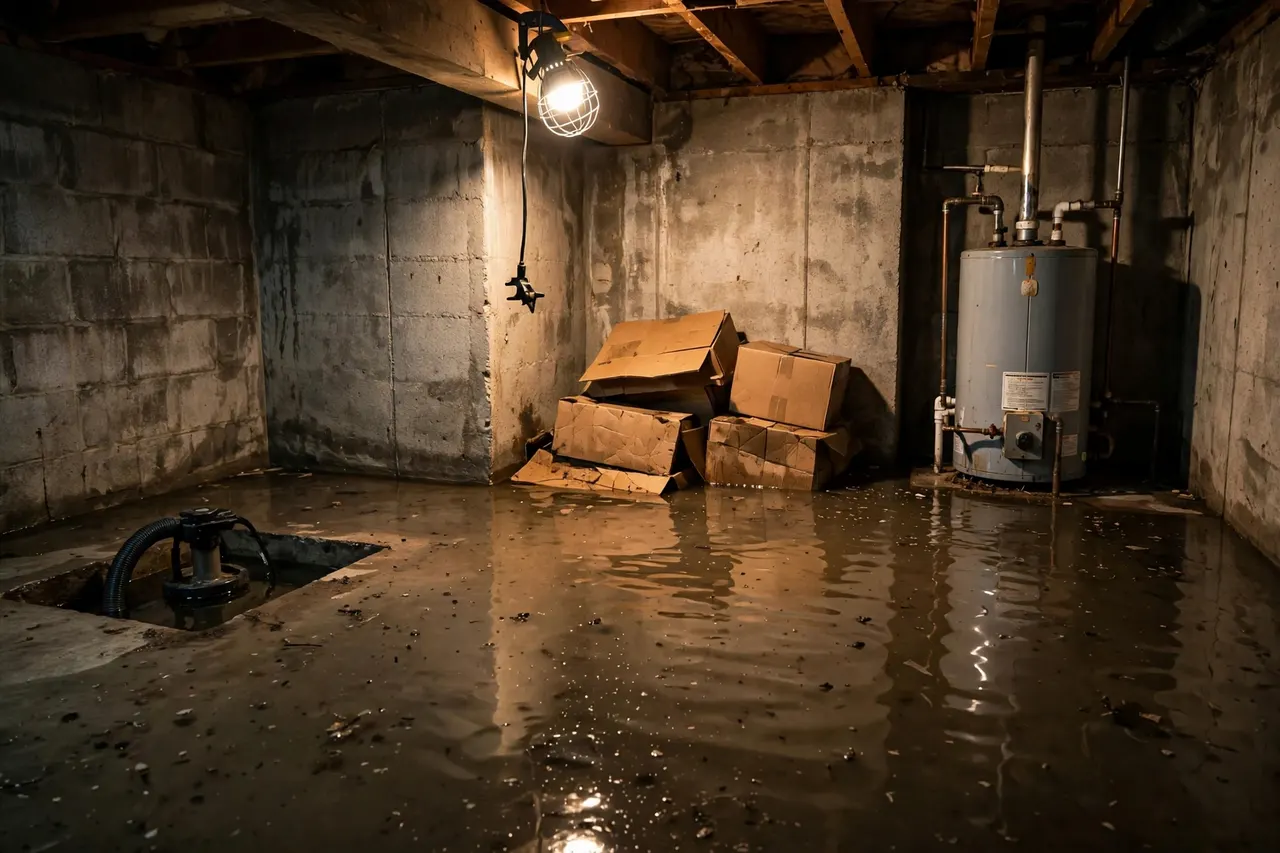
Safety comes before cleaning, because a flooded basement concentrates hazards. Water near an electrical panel, outlets, a furnace or a water heater is an electrical risk, so power to the basement should be off unless you are certain the circuits stayed dry — and never step into standing water to reach a panel. A ceiling below a flooded room above, sagging or bulging, is a reason to stay out entirely.
Treat the water itself as hazardous. Flood water in a basement is handled as Category 3 water, the most contaminated category, because it can carry sewage, soil and chemicals from streets and drains. Wear waterproof boots, gloves and eye protection, keep children and pets out, and do not start at all if the water smells strongly of sewage or fuel — that changes the job, as the last section explains.
What Should You Do Before Any Water Is Removed?
Photograph everything first. Pictures of each wall, the water line, stored belongings and appliances, taken before anything moves, are the record an insurer or the National Flood Insurance Program (NFIP) will ask for. Note when the water entered and how deep it stood. Then move dry, salvageable items up and out of the space if you can do it without wading through deep water.
Check the obvious entry points while you document: is the sump pump running, is water still arriving through a floor drain or wall joint, has the flow stopped? Cleaning against water that is still entering wastes the whole effort. If a drain is backing up, that is a sewage backup pattern — stop, and treat the space accordingly.
How Do You Get The Water Out, Step By Step?
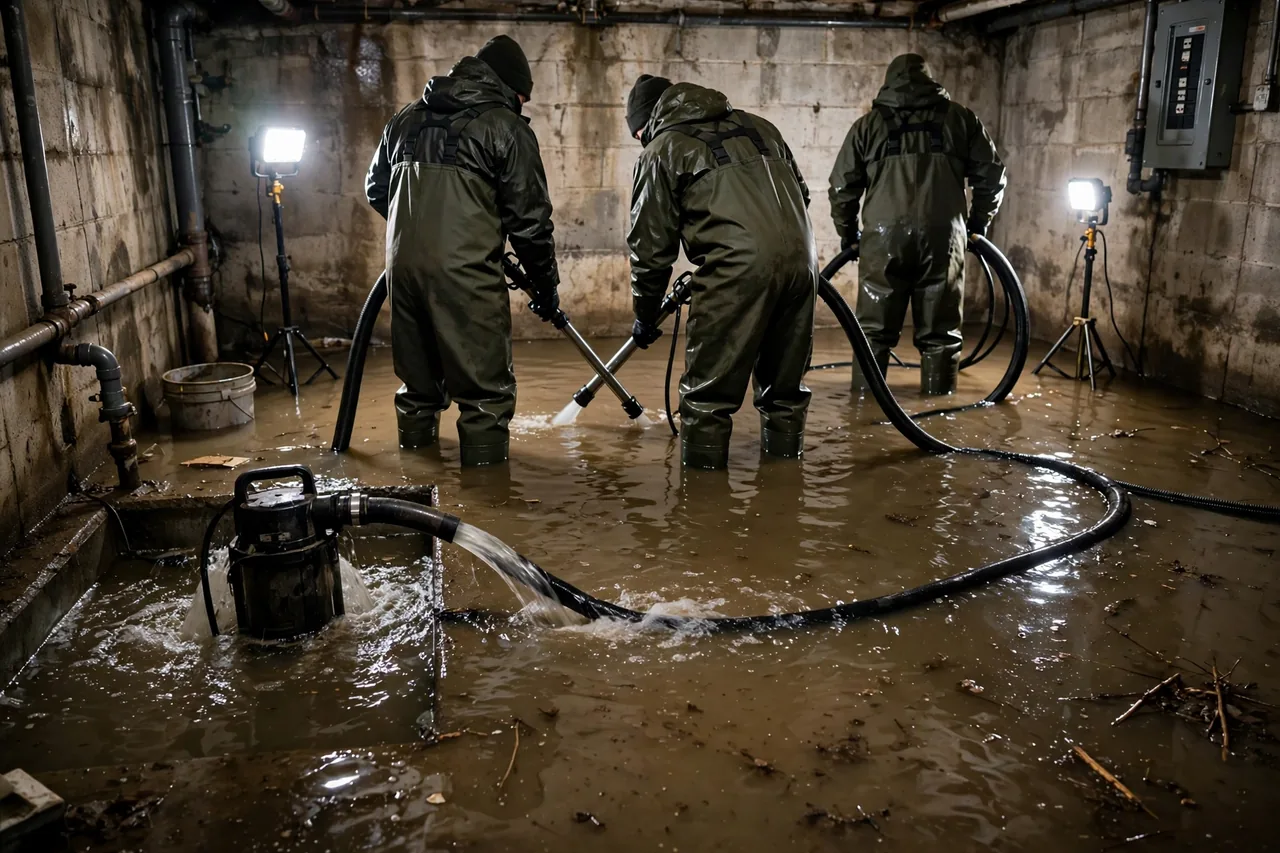
Bulk water comes out first. A submersible pump handles deeper water, discharging it outside well away from the foundation so it does not drain straight back in. A truck-mounted extraction unit, brought by a pro, clears large volumes faster and pulls water from carpet and flooring as well as open floor. As the level drops, switch to a wet vacuum for the last shallow water.
Work the water toward one low point rather than chasing it around the room, and keep the discharge running until the floor is clear. Then remove silt and mud while it is still damp — shovelled and scraped into buckets, it comes out far more easily now than after it dries into sediment across the slab.
What Has To Come Out Of A Flooded Basement?
Porous materials soaked by flood water come out, because they hold contamination where cleaning cannot reach. Carpet and carpet pad, wet insulation, cardboard and stored paper, upholstered items and mattresses are the usual removals. The flooded lower section of finished drywall is opened with a flood cut so the wall cavity behind it can be emptied, cleaned and dried.
What stays is the structure itself. A concrete slab, framing lumber, wooden stairs and tile can usually be washed, treated and dried in place. Hard belongings — metal, glass, sealed plastic — can be cleaned and disinfected. A contents packout approach helps here: inventory everything, decide item by item, and bag contaminated removals so they are not carried through clean rooms.
Flood Water In Your Home Right Now?
One free call connects you with a local pro near you.
How Do You Clean And Disinfect Basement Surfaces?
Washing comes before disinfecting, always. Scrub the slab, walls up to above the water line, and exposed framing with detergent and water, working from the top of the water line downward and rinsing toward the floor drain or pump point. Disinfectants and antimicrobial treatment only work on surfaces already free of mud and silt, so rinse until the water runs clear.
Then treat the clean surfaces. Antimicrobial treatment is applied to framing, the sill plate and the slab to kill bacteria the flood water left behind. Where sewage was involved, a containment barrier and a HEPA air scrubber protect the rest of the home while this work runs. Ventilate the space throughout, and never mix cleaning products.
How Do You Dry A Basement Thoroughly After Cleaning?
Drying is a measured stage, not a waiting period. Air movers push air across the slab and walls to speed evaporation, and a dehumidifier pulls that moisture out of the basement air — a basement's cool, still air makes it slow to dry on its own, so open windows alone rarely finish the job. For large losses, desiccant drying may be used instead.
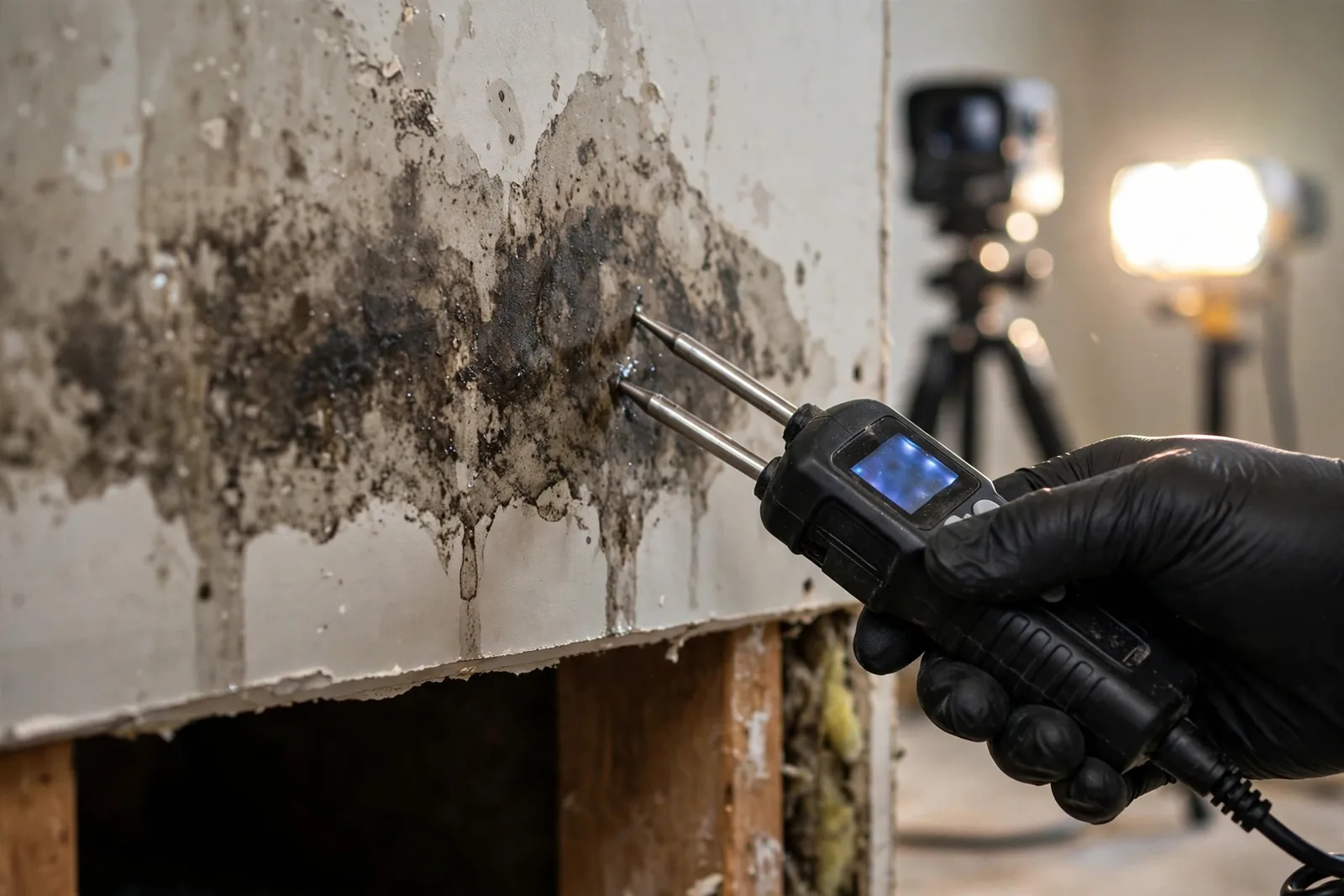
Prove the result. A moisture meter reads the slab, framing and wall materials at marked points, and readings go into a drying log until each point reaches its dry target. Black mold can begin growing on wet materials within 24 to 48 hours, which is why drying starts the same day cleaning does and equipment runs continuously until the log says otherwise.
What Should You Check Before Using The Basement Again?
Before the basement goes back into use, walk it with the drying log in hand: readings at target, no silt film left on surfaces, no musty smell at floor level or inside wall cavities, and the sump pump tested and running. Check that appliances that got wet — especially a water heater and anything on the HVAC system — have been assessed before they are switched back on.
Then look at prevention with fresh eyes. The entry point that flooded the basement once will do it again: a failed pump, a backing-up drain, groundwater seepage through a floor joint. Recording what happened this time, with the photographs you took at the start, is what turns one cleanup into a plan for the next storm.
When Should Basement Cleaning Be Left To A Pro?
Hand the job over when sewage has entered the basement, when water stood deep or reached electrics and appliances, when a finished basement hides wet wall cavities, or when mold is already visible across a wide area. Those conditions need extraction capacity, containment, moisture mapping and drying verification that household equipment cannot match — and mistakes stay hidden behind walls.
A pro also shortens the clock that matters: extraction, removal and drying started the same day save more of the basement than the same work started days later. Call (800) 555-0100 — one free call connects you with a local pro who can arrive in 30–60 minutes in the cities served, check the basement room by room, and run the cleaning in the right order from the start.