How To Save Flood-Damaged Documents And Photos
Reviewed By Hamza 9 Min Read
Quick Answer
Many wet documents and photos can be saved if you act quickly and handle them gently. Lift them out of the water without pulling stuck pages apart, air-dry single sheets flat, and freeze items you cannot dry straight away, because freezing pauses mold growth and ink damage while you work through the pile in small batches.
A drawer, box or album that sat in flood water is not automatically a total loss. Paper and photographs are tougher than they look when wet, but rough handling in the first hours does more damage than the water itself, so slow, gentle work saves more than speed.
What Should You Do First With Wet Documents And Photos?
Start by getting documents and photos out of standing water without forcing anything apart. Flood water is treated as Category 3 water, so wear gloves, work in a ventilated space, and keep wet papers away from food surfaces. Lift whole folders, albums and stacks out as they are, supporting them from underneath on a tray or board so saturated paper does not tear under its own weight.
Set up a clean, dry sorting area, ideally behind a Containment Barrier, before you open anything. Photograph boxes and drawers as you found them, because those pictures support insurance and assistance claims later. Then separate the pile into three groups: items you can air-dry today, items to freeze for later, and items that are already falling apart.
How Can Wet Documents And Photos Be Saved After A Flood?
Wet documents and photos are saved by drying them gently or freezing them until you can. Single sheets usually air-dry well. Thick stacks, coated papers and photo prints that are sticking together are safer frozen, because cold stops mold and keeps pages from bonding permanently while they wait their turn.
Work in small batches rather than spreading the whole collection out at once. Wet paper left in a warm room grows mold quickly, and Black Mold can begin on damp materials within 24 to 48 hours. Drying a few dozen sheets properly beats losing hundreds to a rushed, crowded tabletop.
Which Papers Need Saving First?
Save identity and property papers first, because they are the hardest to replace and the soonest needed. Passports, birth certificates, property deeds, insurance policies, medical records and financial paperwork unlock claims, assistance applications and everyday life after a flood. Put them at the front of the drying queue even if family photos feel more urgent emotionally.
Next come one-of-a-kind items: handwritten letters, children's artwork, family photographs and keepsakes that exist nowhere else. Printed papers, statements and manuals usually have copies held by the issuing office or bank, so they can wait. If an original is too damaged, note what it was — replacement copies can be requested from the agency that issued it.
How Do You Air-Dry Wet Paper Without Ruining It?
Air-dry wet paper by laying single sheets flat on clean absorbent material, image or text side up, with moving air from a fan pointed across the room rather than directly at the pages. Replace the absorbent layer underneath as it soaks through. A HEPA Air Scrubber running nearby keeps disturbed spores out of that air. Keep sheets separate so they do not stick as they dry, and never stack damp pages in a pile.
Avoid heat. Hair dryers, ovens and direct strong sunlight can cockle paper, fade photographs and set stains. Room-temperature air and patience do a safer job. Interleaving plain white paper towels between slightly damp pages helps draw out the last moisture before you store them.
Flood Water In Your Home Right Now?
One free call connects you with a local pro near you.
Why Does Freezing Wet Documents And Photos Help?
Freezing helps because it pauses the damage clock. At freezer temperatures mold cannot grow and wet pages stop sticking further, so a soaked box can wait days or weeks while you dry it a handful of sheets at a time. Freezing is the standard holding step for large quantities of wet paper that cannot be dried at once.
Pack items loosely in freezer bags or boxes with waxed or freezer paper between groups, and do not cram them tight. When you are ready, take out one small batch, let it thaw, and air-dry it straight away. Items can be refrozen if you run out of time, which makes the freezer a flexible staging area rather than a one-shot decision.
How Do You Handle Photos That Are Stuck Together?
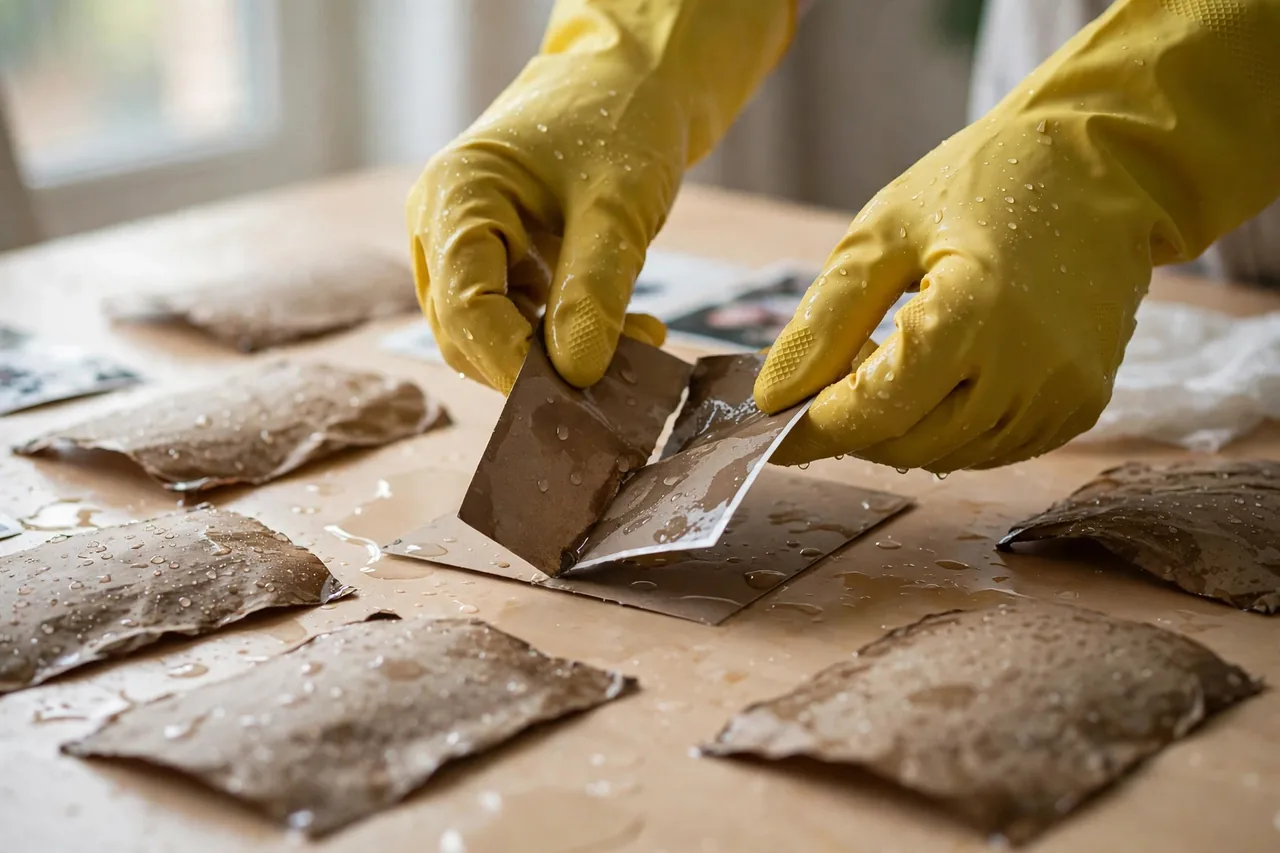
Never pull stuck photographs apart dry — the image layer tears away with the backing. If prints are stuck in a stack, keep the stack together and freeze it, or soak the block in clean, room-temperature water so the prints release on their own as the surfaces soften. Work slowly and let the water do the separating.
Once separated, rinse prints gently in clean water to shift silt and mud, then lay them face up on a clean surface to dry. Do not wipe or blot the image side, because the wet emulsion scratches and smears easily. Negatives and slides can be rinsed the same way and dried standing upright.
What About Books, Letters And Keepsakes?
Books are saved by drying them slowly with their pages supported. A damp book can stand on its edge with pages gently fanned so air circulates, with absorbent sheets interleaved every few pages and changed as they wet through. A thoroughly soaked book is a candidate for freezing first, then drying in sections.
Letters and handwritten keepsakes need extra care because inks vary: some run the moment they get wet. Test nothing and rush nothing — dry them flat, face up, and keep different items apart so inks cannot transfer. Fabric keepsakes such as baby clothes should be rinsed in clean water and dried flat, away from the paper pile.
When Should Wet Papers Be Thrown Away?
Throw away papers that are disintegrating, unreadable, or heavily contaminated and easily replaced. Flood water carries bacteria, so documents soaked after a Sewage Backup that have copies elsewhere — statements, junk mail, printed manuals — are not worth the health risk of handling and storing. Bag them and discard them with other flood debris.
Before anything goes, photograph it and list what it was. That record helps with claims and with requesting replacements. If a room still holds standing water or soaked flooring, the papers are only part of the problem: call (800) 555-0100 — one free call connects you with a local pro who can arrive in 30–60 minutes in the cities served and handle extraction and drying while you focus on the keepsakes.