Is Well Water Safe After A Flood?
Reviewed By Hamza 8 Min Read
Quick Answer
Treat private well water as unsafe after flooding until the well has been inspected, cleaned and disinfected where needed, and cleared by a test. Flood water can enter through a damaged cap or casing and carries germs you cannot see or taste, so use another safe source for drinking and cooking in the meantime, and do not rely on looks or boiling alone.
A private well gives a home its own water supply — and its own responsibility after a flood. Unlike a public supply, nobody upstream is testing it for you. This guide explains why flooded well water is treated as unsafe, and the order of checks that clears it.
Why Is Well Water Treated As Unsafe After Flooding?
Flood Water is treated as Category 3 Water — the most contaminated kind. On its way across yards, roads, fields and septic areas it picks up germs, Silt And Mud, and chemicals, and any of that can reach a well. Because the harm cannot be seen, smelled or tasted reliably, flooded well water is treated as unsafe until checks prove otherwise.
That caution applies even when the home itself took little water. The well, its cap and casing and the ground around them are the supply's front door, and flooding at that door is enough. Acting as if the water is unsafe, then being cleared, is far safer than drinking first and testing later.
What Should You Stop Using Well Water For Until It Is Checked?
Until the well is cleared, do not use its water for drinking, cooking, making ice, brushing teeth or preparing food, and follow local health guidance and general CDC and FEMA guidance on washing and bathing. Use another safe source, such as bottled water or a supply your health office names, for anything that is swallowed or touches food.
Extend the same caution to pets and livestock, and to guests who may not know the well was flooded. Put a note at the kitchen tap so nobody fills a glass. The pause is temporary; it ends when testing, not guesswork, says the water is clear.
How Can Flood Water Reach A Private Well?
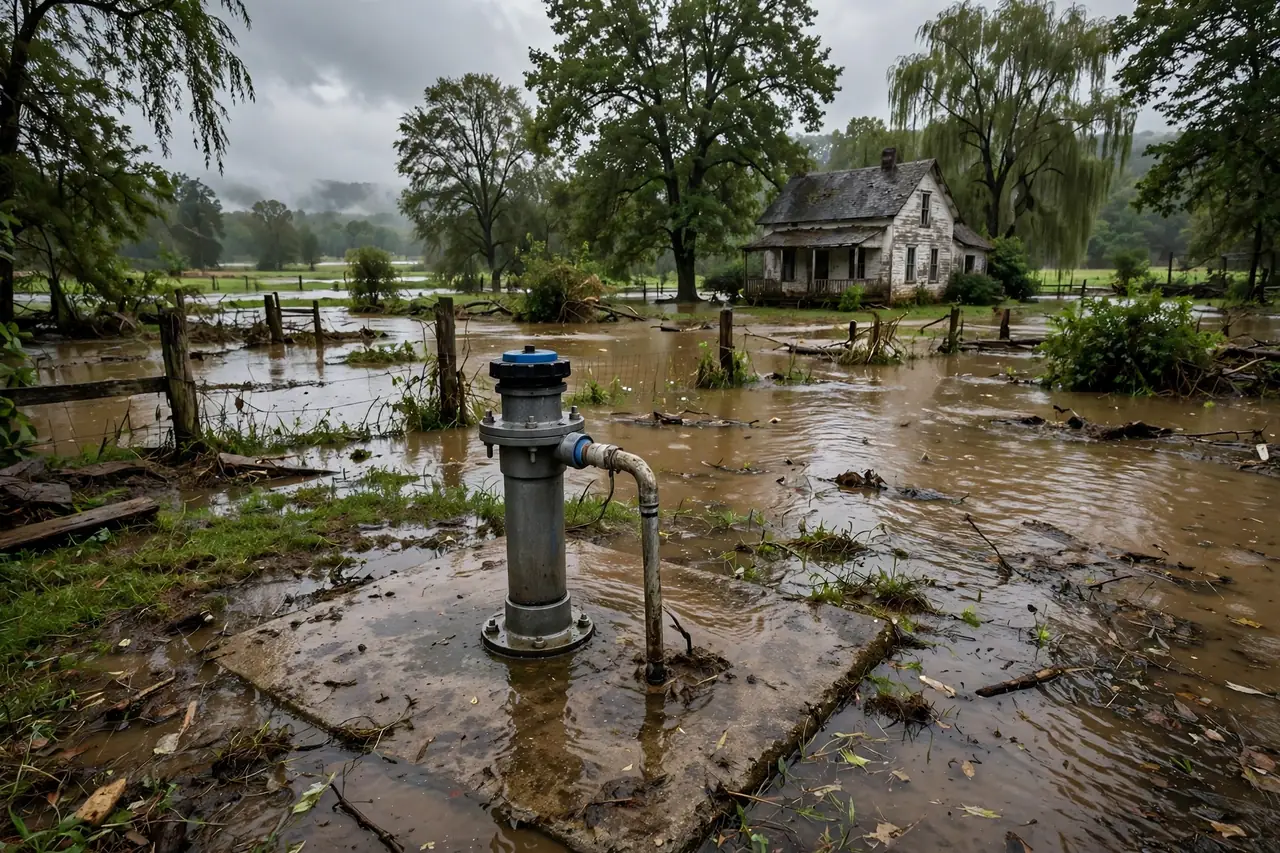
Whether it arrives as Riverine Flooding or a Flash Flood, it reaches a well through its openings and its surroundings. Water standing over or around the wellhead can enter through a loose, damaged or submerged cap, through cracks in the casing, or along the outside of the casing where the seal with the ground has failed. Saturated soil and Groundwater Seepage let contamination travel further than it would in dry ground.
Below ground, Sewage Backup, a flooded septic area, fuel spill or chemical store nearby can all add to what the water carries toward the well. Electrical parts and pump equipment under water can also fail and open the system up. This is why the inspection covers the area around the well, not only the water in the tap.
What Should Be Inspected Around The Wellhead Before Use?
The inspection starts above ground: the well cap should be intact and seated, the casing undamaged, and the ground around the wellhead checked for silt, debris and standing water left by the flood. Any electrical boxes, vents or pump parts that sat under water need attention before the system runs as normal.
Electricity and water are a dangerous mix, so wiring or a breaker panel that got wet should be left alone and checked by a qualified electrician, and the well work itself belongs with a well professional or your local health office's guidance. Do not open the well yourself: an opened, unsealed well is another route in for contamination.
Flood Water In Your Home Right Now?
One free call connects you with a local pro near you.
Why Does Testing Come Before Drinking The Water Again?
Testing is the only step that answers the actual question — what is in this water now — rather than what the water looks like. Germs that flood water commonly carries leave no taste, colour or odour, so a clear glass proves nothing. A laboratory result replaces opinion with evidence.
Sequence matters as much as the test. Testing before inspection and disinfection can waste the effort, because a damaged cap can recontaminate the well the day after a sample is taken. The settled order is: inspect and repair, clean and disinfect where needed, then test, and only then return the water to full use.
How Is A Flooded Well Usually Cleaned And Disinfected?
In outline, a flooded well is first made sound — cap, casing and seals repaired or refitted — then cleaned of silt and debris, then disinfected under the direction of a well professional or local health guidance, so the disinfecting reaches the parts of the system the flood water reached. Household improvisation is not a substitute: doses and contact are not guesswork.
After disinfection, the system is cleared through as directed and a sample is taken for testing. If a result comes back showing contamination remains, the process is repeated rather than debated. Filters, softeners and water heaters that ran contaminated water may also need cleaning or servicing, which the inspecting professional can advise on.
What If The Well, Pump Or Wiring Sat Under Water?
Equipment changes the picture. A Submersible Pump, pressure system or control box that sat under Flood Water may be damaged or contaminated inside, and wet wiring is a safety hazard in its own right. Have the electrical side checked before switching the system back on, and expect a well professional to advise whether flooded components can be cleaned or should be replaced.
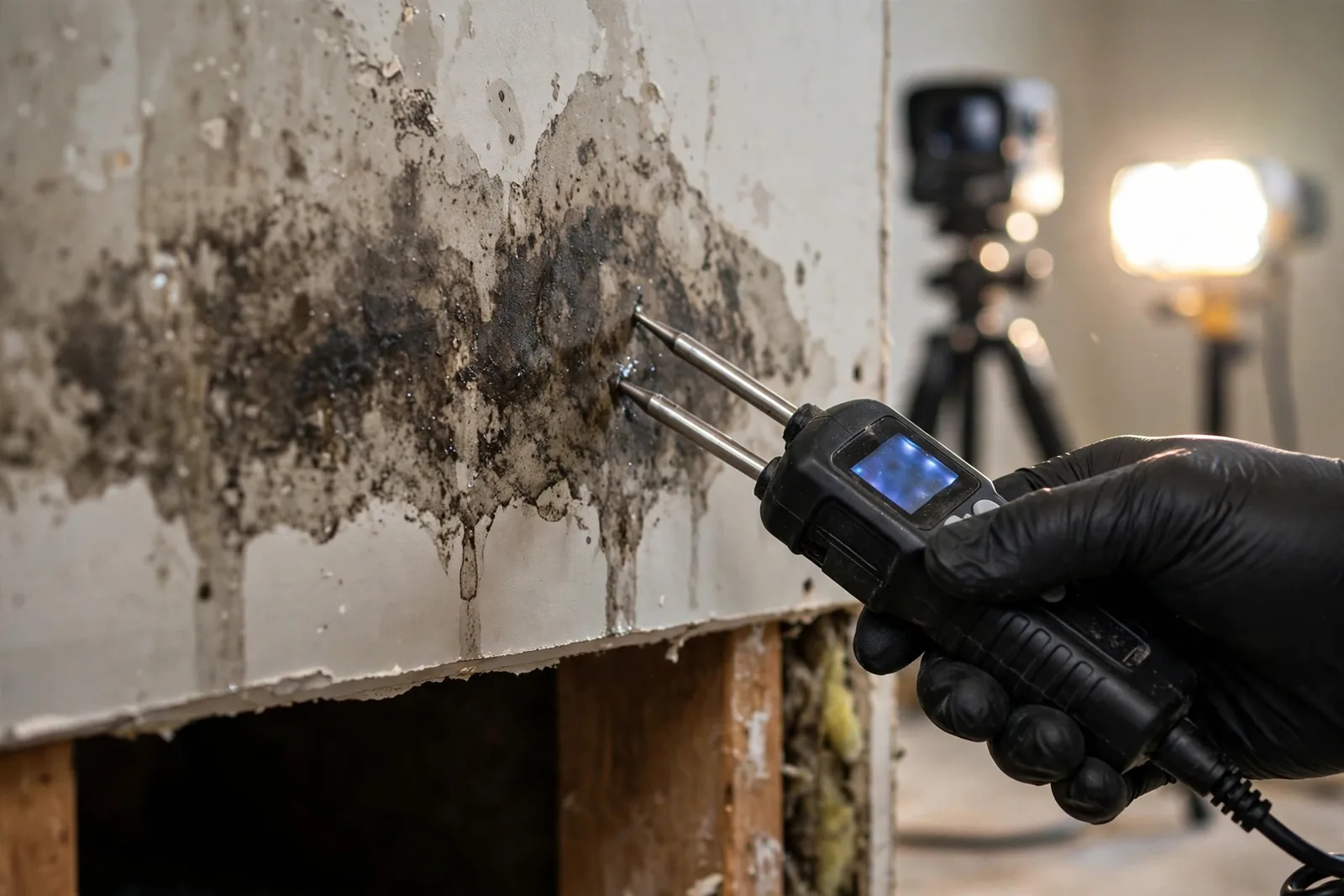
Inside the home, the flood itself still needs handling in parallel: wet rooms deteriorate quickly, and Black Mold can begin growing within 24 to 48 hours. A Moisture Meter shows which rooms are truly dry. The well checks and the home drying are separate jobs that both belong at the top of the same list, not alternatives to each other.
How Do You Know When Well Water Can Be Used Again?
The well is back in use when the inspection is complete, any needed cleaning and disinfection are done, and a test result says the water is clear. That result, in writing, is the finish line — not the calendar, not clear-looking water, and not a neighbour's result. Keep it with the inspection notes as part of the home's flood record.
If the flooded well is only part of a flooded home, do not let paperwork delay drying. Call (800) 555-0100 — one free call connects you with a local pro who can arrive in 30–60 minutes in the cities served, start Water Extraction and Structural Drying while the well is being inspected and tested.