Sewage Backup After A Flood: What To Do
Reviewed By Hamza 8 Min Read
Quick Answer
Stop using the home's water, keep people and pets out of the affected rooms, and do not try to plunge or clean it yourself. Sewage is the most contaminated water category: pros extract it, remove what it soaked, treat what remains, and dry the structure to measured targets.
A sewage backup after flooding is the version of a flood nobody should clean up with a mop. Wastewater rising through drains brings the sewer into your living space, and it arrives at exactly the moment the street outside is also under water. The right response is a short list of protective steps, then professional extraction, removal and treatment in a strict order.
Why Does Flooding Make Sewage Back Up Into Homes?
Flooding backs sewage up by overwhelming the system that normally carries it away. Street sewers take on flood water through manholes and connections until they run full; when that happens, flow can reverse up the line serving your home. Homes on a septic system face the same physics from the other side, as saturated ground gives wastewater nowhere to drain.
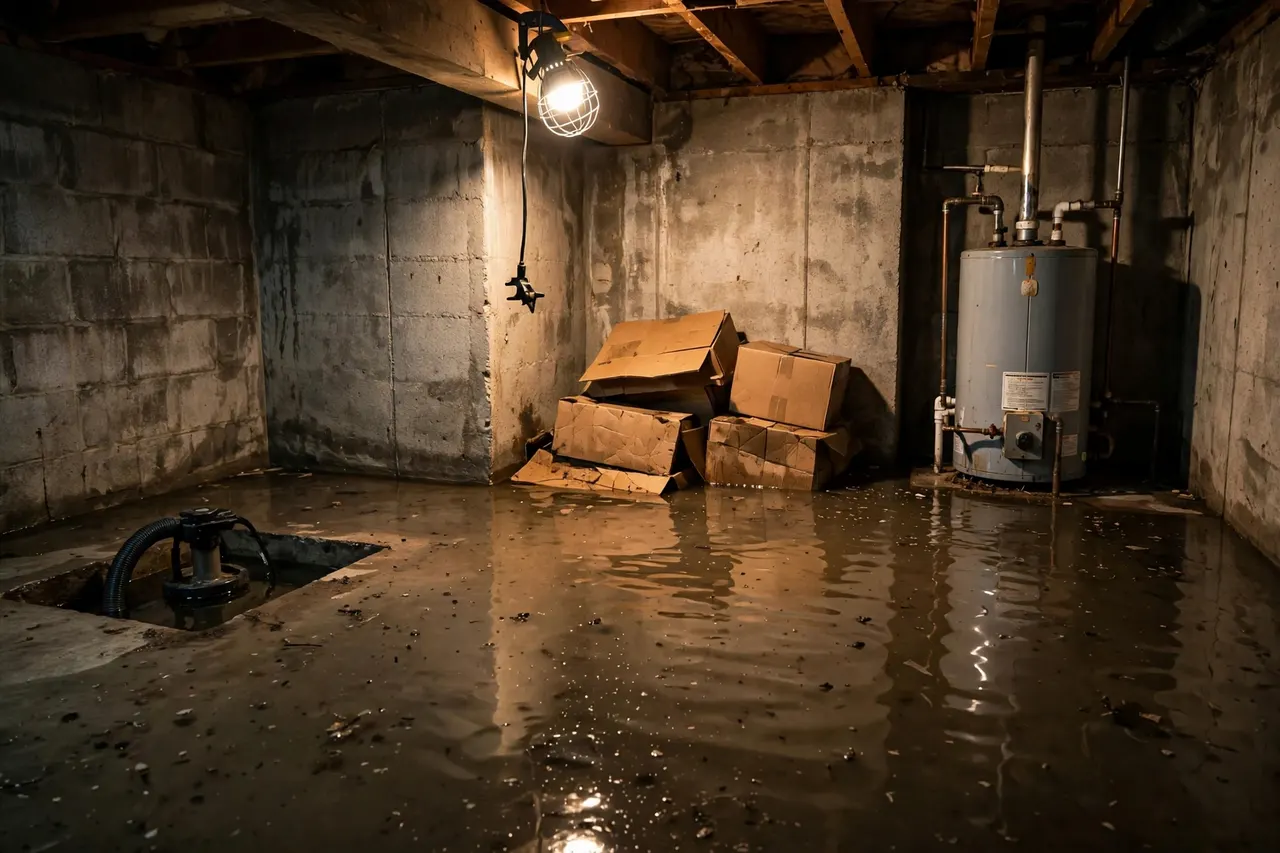
The home's lowest openings lose first. A floor drain, a ground-floor shower, a low toilet or a utility sink becomes the escape point, because wastewater under pressure follows the lowest route available. That is why a backup often appears in one bathroom or utility room while the rest of the home is still dry, and why it can arrive before street water reaches the door.
How Can You Tell Sewage Is Backing Up, Not Just Flood Water Rising?
Direction is the giveaway. Flood water enters from outside — under doors, through vents, across thresholds — and spreads from the entry point. A backup rises from inside the plumbing: drains gurgle, a shower tray fills from below, a toilet bowl level climbs, or one fixture overflows when another is used elsewhere in the home.
The smell confirms it. Wastewater has a sewage odour that ordinary flood water, for all its contamination, does not match in strength. Dark water, visible solids or toilet paper appearing in a shower or floor drain settle the question. Treat the room as contaminated from that moment, whatever the water level outside is doing.
What Should You Do In The First Minutes Of A Sewage Backup?
Stop adding water. Every toilet flush, tap and appliance adds flow to a line that cannot take it, and it will surface through the lowest drain. Keep people and pets out of affected rooms, and close the doors if you can do so without stepping through wastewater.
If the electrical panel is reachable from a dry place, switch off power to the affected rooms; never wade to reach it. Photograph the rooms from a dry doorway for your records, including which fixtures the water rose through. Do not plunge, rod or add drain chemicals — forcing a flooded line can push wastewater out of other fixtures, and the cause is usually beyond the home's own pipework during a storm.
Which Rooms And Materials Does Sewage Change Completely?
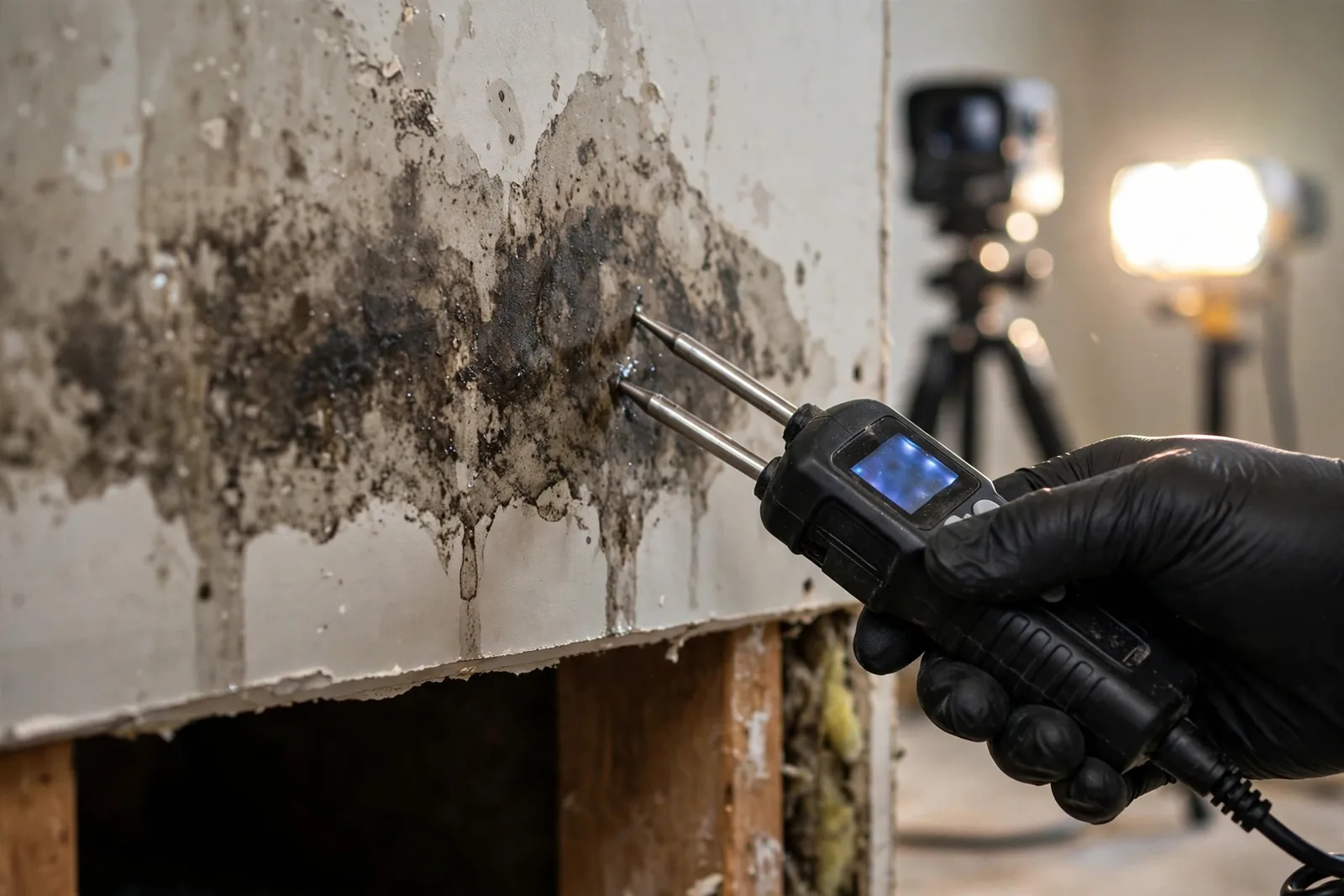
Sewage changes the rules for everything porous it touches. Carpet and carpet pad, insulation, drywall, upholstery and particleboard cabinetry hold wastewater deep inside, where cleaning cannot reach, so they are removed rather than cleaned. A flood cut takes out the soaked lower drywall so the wall cavity behind it can be dealt with as well.
Flood Water In Your Home Right Now?
One free call connects you with a local pro near you.
Structural materials are treated differently. A concrete slab, framing lumber and tile can usually be cleaned, disinfected and dried in place, which is why a sewage room is not automatically a demolished room. Bathrooms, kitchens and utility rooms are hit hardest because they hold the fixtures wastewater rises through, and their cabinets and flooring are often the first removals.
How Do Pros Clean And Treat A Home After A Sewage Backup?
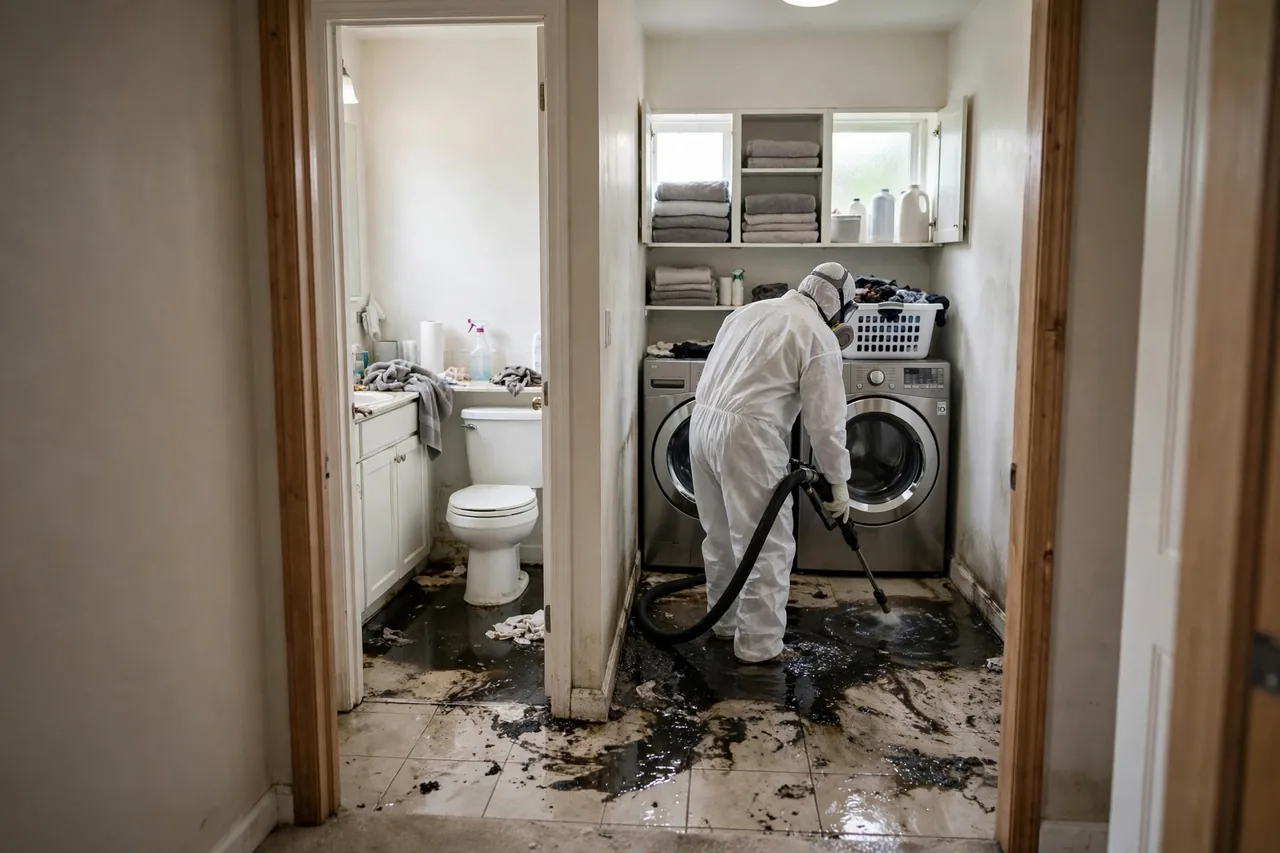
Pros work in a set order. Inspection and moisture mapping show how far wastewater travelled, including into wall cavities. Standing water is removed by water extraction, a containment barrier can seal the work area, and a HEPA air scrubber filters the air while contaminated materials are bagged and taken out.
What remains is then cleaned and given antimicrobial treatment, because disinfectants only work on surfaces free of soil and silt. Structural drying follows, with air movers and a dehumidifier running until moisture readings at the mapped points reach dry targets, recorded in a drying log. Only then does restoration — new drywall, flooring and finishes — begin.
What Can Be Saved After Sewage Has Touched It?
Hard, non-porous items have the strongest case: metal, glass and sealed plastic can usually be cleaned and disinfected. Sealed canned and bottled goods are judged under official guidance rather than appearance. Almost everything soft goes the other way — mattresses, pillows, upholstered furniture, rugs and soft toys soaked by wastewater are normally discarded.
A contents packout keeps the decision orderly. Items are inventoried and photographed, salvageable pieces are moved out for cleaning, and the rest are recorded before disposal, which matters for an insurance or FEMA claim. If you are unsure about an item, leave it in place and ask: handling it yourself spreads contamination into rooms that stayed clean.
How Can The Risk Of A Repeat Backup Be Reduced?
Start by establishing the cause. A backup that happened only under flood conditions points to the street sewer or a saturated septic field; one that recurs in normal weather points to the home's own line, which a plumber can inspect. A backflow valve fitted in the home's drain line closes against reverse flow and is the main structural protection against a repeat during flooding.
Daily habits help at the margins: keep floor drains accessible rather than built over, and know which fixture in your home is lowest, because that is where the next backup will announce itself. If wastewater is in your home now, call (800) 555-0100 — one free call connects you with a local pro who can arrive in 30–60 minutes in the cities served and start extraction and treatment.