What Does A Water Mitigation Company Do?
Reviewed By Hamza 9 Min Read
Quick Answer
A water mitigation company limits the damage water does to a home. It inspects and maps moisture, extracts standing water, removes materials that cannot be saved, dries the structure to measured targets, cleans and treats what remains, and documents everything for the homeowner. It does not rebuild — restoration comes after mitigation has made the home clean and proved it dry.
Homeowners often make the call without knowing what they have just hired. A water mitigation company is the crew that arrives while a home is still wet, and its whole purpose is to stop a bad day becoming a ruined house. Here is the work, stage by stage, in the order it usually happens.
What Does A Water Mitigation Company Do, In Short?
In short, a water mitigation company limits the damage water causes. It inspects and maps the moisture, extracts standing water, removes materials that cannot be saved, dries the structure to measured targets, cleans and treats what remains, and documents all of it. Mitigation is the emergency stage of flood recovery: it comes before remediation of contamination is finished and long before restoration rebuilds anything.
The word mitigation means reducing severity, and that is the test of every task on site. If a step does not stop water spreading, remove what water has ruined, or move the structure toward dry, it does not belong to this stage. Speed matters because the damage is still growing while the crew works.
What Happens On The First Visit To A Flooded Home?
The first visit starts with a safety assessment and an inspection, not with a pump. The pro checks for risks around electrics and appliances, confirms whether the water is still arriving, and walks every room — including the crawl space, garage and wall cavities that can be reached — looking for where water has travelled.
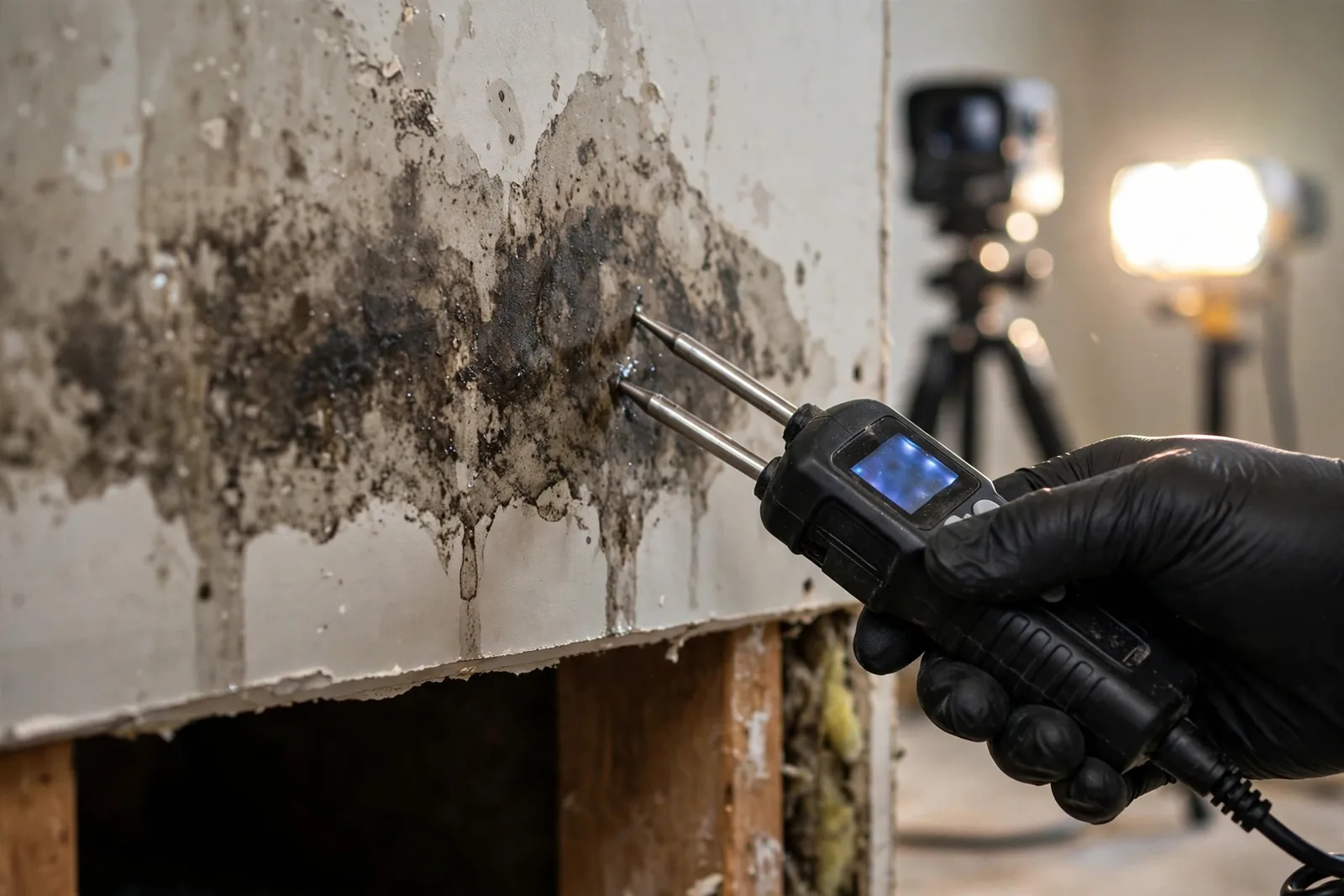
Then comes moisture mapping. Using a moisture meter, and often a thermal imaging camera that shows damp areas the eye cannot see, the pro records readings at marked points in each room. Those readings decide the whole scope: what will be extracted, which materials must come out, where drying equipment will stand, and how everyone will later know the home is dry.
How Does It Stop The Source And Extract Standing Water?
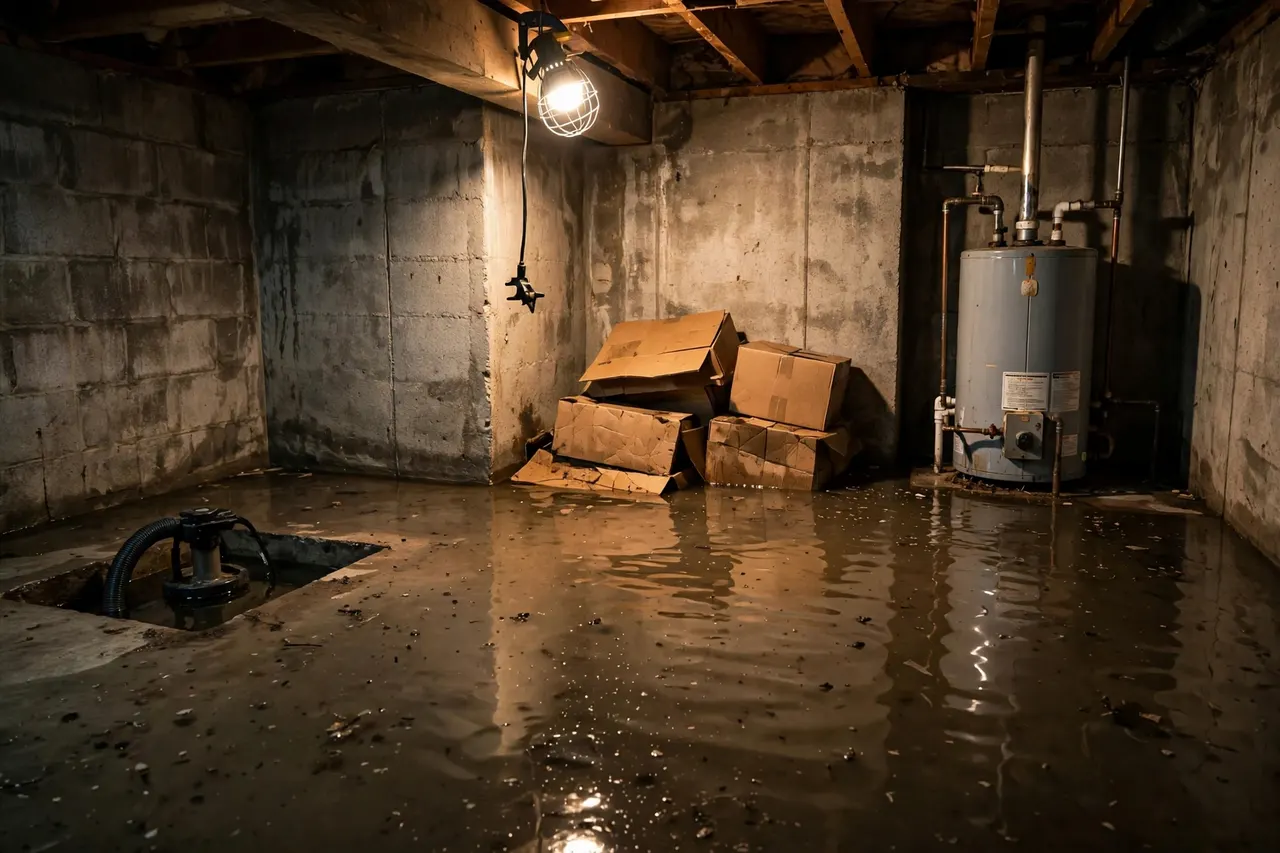
Extraction begins once the source is controlled. If water is still entering — a failed appliance, a broken line, runoff still pushing at a doorway — that is dealt with first or worked around safely, because removing water that is still being replaced achieves nothing. Deep standing water is handled by a submersible pump; larger volumes are pulled by a truck-mounted extraction unit.
Extraction matters more than any other single step for a simple reason: liquid water removed by a pump is water the drying equipment never has to pull out of the air. A thorough extraction shortens the drying stage by days and saves materials that slow drying would lose. Silt and mud left by flood water are cleared as part of the same pass.
What Materials Does It Remove, And Why?
The company removes materials that flood water has ruined beyond safe recovery. Carpet and carpet pad soaked by contaminated water usually come out, wet insulation is taken away, and damaged drywall is removed with a flood cut above the water line so the framing behind it can be reached and dried. Swollen particleboard cabinetry and badly cupped hardwood flooring may also have to go.
Removal is not carelessness; it follows the water category. Flood water is treated as Category 3 water, carrying bacteria from streets, yards and drains, and porous materials hold that contamination deep inside where cleaning cannot reach it. Structural materials — framing lumber, a concrete slab, tile — can usually stay, because they can be cleaned, treated and dried in place.
Flood Water In Your Home Right Now?
One free call connects you with a local pro near you.
How Does It Dry The Structure And Prove The Drying Worked?
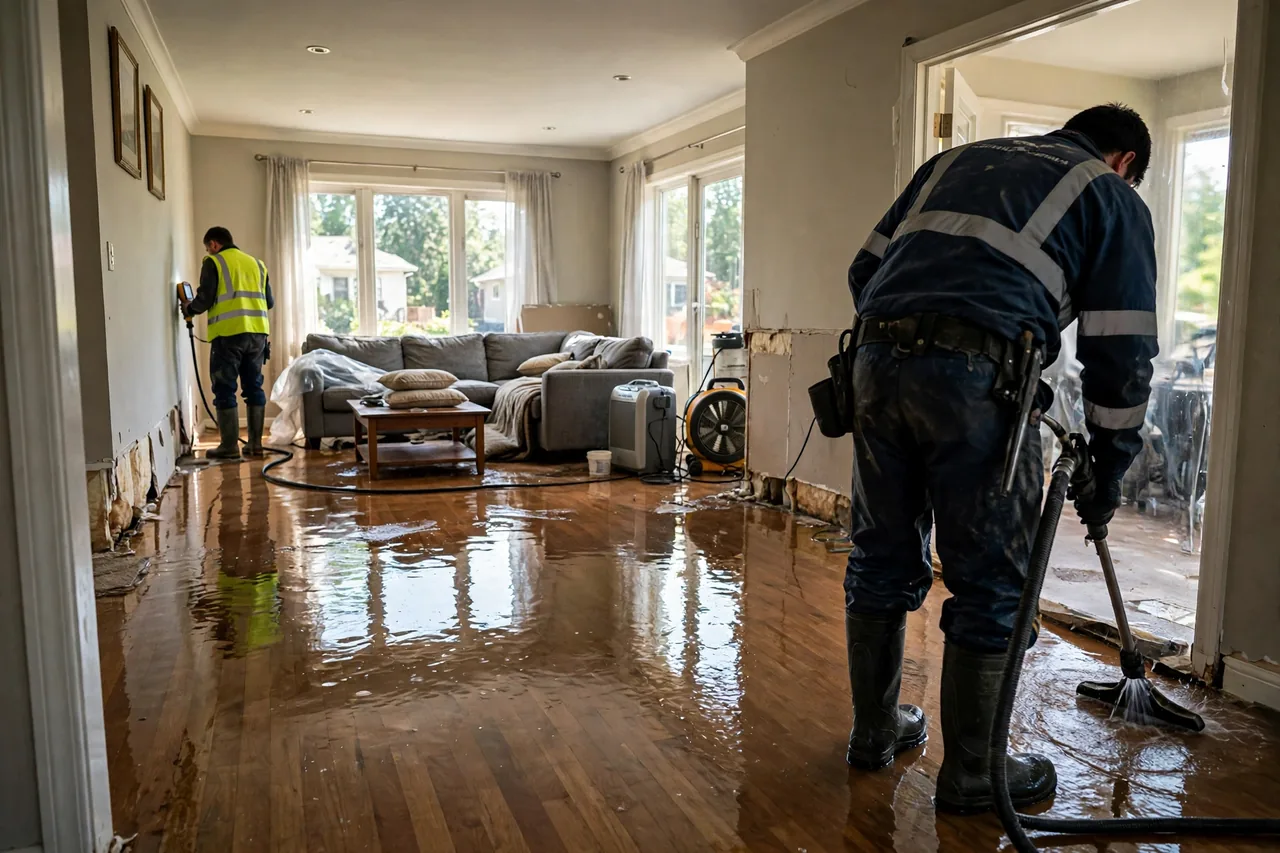
Structural drying is the controlled drying of the building itself. Air movers push air across wet surfaces to speed evaporation, and a dehumidifier removes that moisture from the indoor air so it cannot settle elsewhere. For large losses, desiccant drying may be used instead. Equipment is placed from the moisture map, aimed at wall cavities, subfloors and slabs as well as open rooms.
The proof is a drying log. The pro returns to the marked points and records fresh readings, usually daily, until each material reaches its dry target. Only then is equipment removed. That log is the difference between a home that feels dry and one that is measured dry — and closing a wall over a cavity that merely felt dry is how mold and rot get built into a house.
How Does It Clean And Treat What Stays In Place?
Once ruined material is out, the surfaces that remain are cleaned and given antimicrobial treatment. Treatment is applied to exposed framing, the sill plate and subfloors, and it follows cleaning because disinfectants cannot work through a layer of silt and mud. On sewage losses, a containment barrier may seal the work area while a HEPA air scrubber filters the air.
Belongings are handled alongside the structure. A contents packout inventories salvageable items and moves them out of the work area; hard items can usually be cleaned and disinfected, while soft items soaked by contaminated water, such as mattresses and upholstery, often cannot be kept. The pro explains those calls item by item rather than clearing a room wholesale.
What Documentation Does It Produce For The Homeowner?
The company leaves a paper trail: the moisture map, photographs of the damage and the work, equipment and visit notes, and the drying log showing readings falling to target. That record is the homeowner's evidence for an insurer or for FEMA after a declared flood, and it is also the handover document for whoever rebuilds.
Keep it all together with your own photographs from before work started. Standard homeowners policies usually do not cover outdoor flooding — flood damage is usually covered only by a separate flood policy, such as one through the National Flood Insurance Program — but either way, a claim stands on documented damage, and the mitigation record is the strongest documentation most homeowners ever hold.
What Does A Water Mitigation Company Not Do?
A mitigation company does not rebuild. New drywall, replacement flooring, repainting and refitted cabinetry belong to restoration, which starts only when the drying log proves the structure is ready. It also does not repair the plumbing or appliance that caused an indoor loss, and it does not decide what your policy pays — it documents the damage that any claim is judged on.
If your home is wet now, you do not need to work out which stage you need before calling. Call (800) 555-0100 — one free call connects you with a local pro who can arrive in 30–60 minutes in the cities served, map the moisture room by room, and explain the mitigation your home needs.