Flooded Electrical Panel Or HVAC: What To Do First
Reviewed By Hamza 8 Min Read
Quick Answer
Stay away from a flooded electrical panel and never walk through water to reach it. Keep the HVAC system and flooded appliances switched off, keep people and pets out of the affected rooms, and wait for the power company and an electrician to judge what can be used again. Nothing that sat in flood water should be run on a trial basis.
Water and electricity are the most dangerous pairing in a flooded home, and the HVAC system is usually wired into the same rooms the water reaches first. The safe pattern is simple: nothing electrical gets touched, switched or run until someone qualified has checked it.
What Should You Do If An Electrical Panel Or HVAC System Floods?
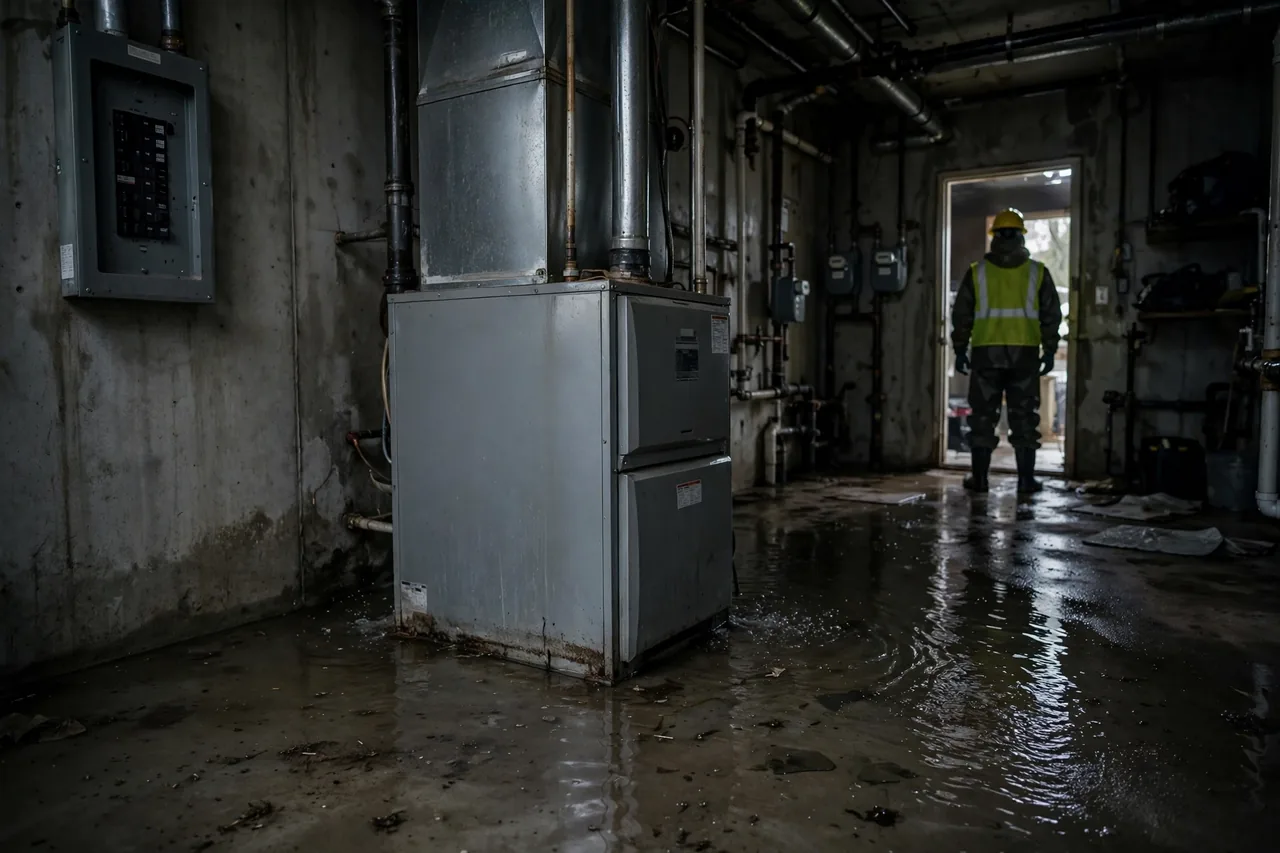
Keep away from the panel, keep the HVAC system off, and do not walk through flood water to reach either one. If you can switch power off from a dry location without crossing water, you may do so; if reaching the panel means wet floors or standing water, leave it and contact your power company. Treat every flooded circuit as live until a pro says otherwise.
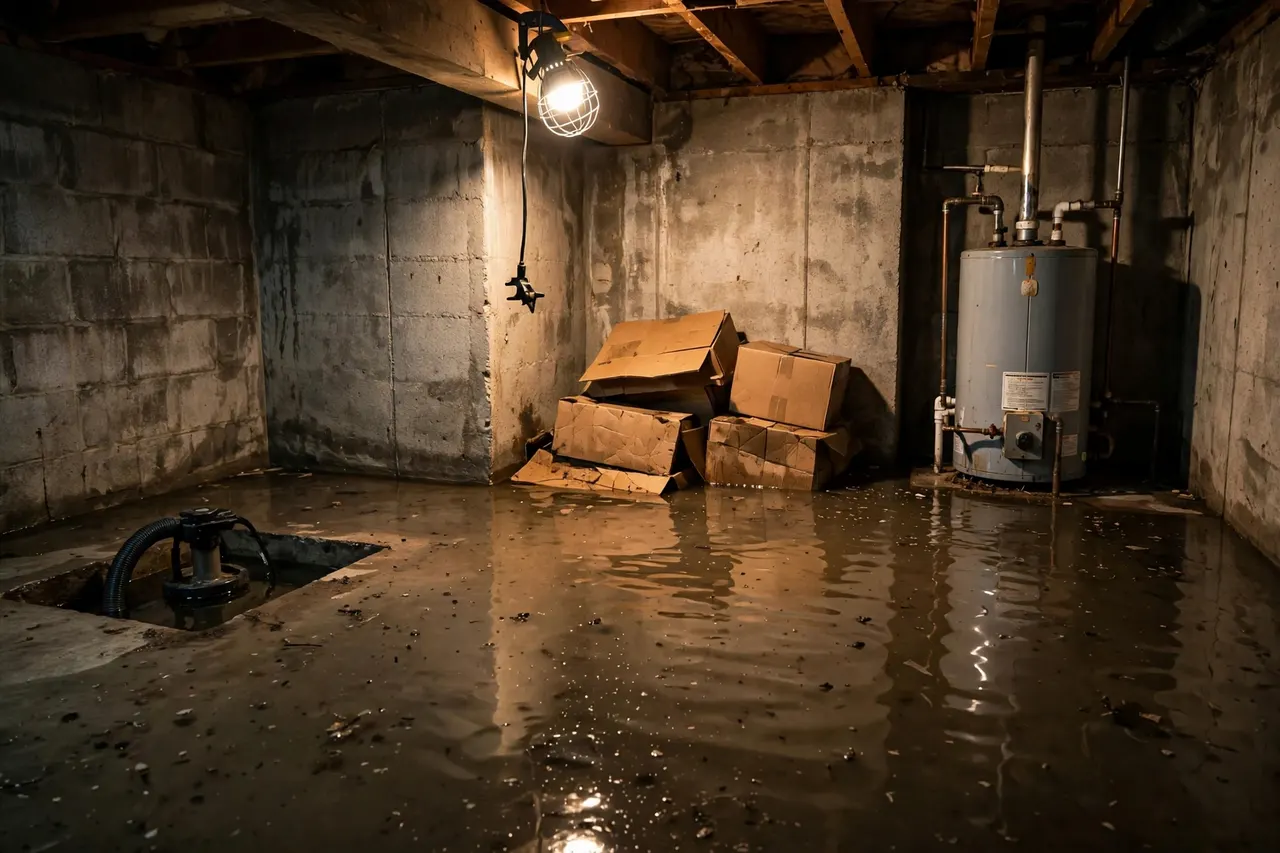
Move people and pets out of affected rooms and note what got wet: panel, outlets, appliances, the air handler, duct openings and the water heater. Photograph from doorways for your records. That list is what an electrician and the cleanup pro work from on arrival.
Why Is Flood Water Around Electrics So Dangerous?
Flood water conducts electricity, and it hides what it touches. Water that has crossed streets, yards and drains is treated as Category 3 water, carrying silt and chemicals that foul contacts inside panels and appliances. A breaker box that looks merely damp may have energised parts, damaged insulation and connections already starting to corrode beneath the surface.
The danger lasts after the water leaves. Corrosion and trapped moisture inside outlets, junction boxes and motor housings can cause faults days or weeks later, including overheating connections. That is why a quick wipe-down and a hopeful test switch are not a safety check, and why flooded electrical parts are assessed properly before use.
When Is It Safe To Turn The Power Back On?
Power is safe to restore only after the supply side and the home's own wiring have been checked. The power company deals with the meter and service connection; an electrician assesses the electrical panel, circuits, outlets and fixed appliances that got wet. Where local rules require an inspection before reconnection, that inspection has to happen first.
Expect restoration to be selective. Circuits that stayed dry may be returned while flooded circuits stay off until wiring and devices on them are repaired or replaced. Portable heaters, extension cords and generators are not a shortcut around this process: generators belong outdoors, away from windows, because of carbon monoxide risk.
What Happens To A Flooded HVAC System And Ductwork?
A flooded HVAC system takes water into its air handler, blower motor, controls and filter, and the ductwork can collect silt and standing water at low points. Running the system in that state spreads moisture and contamination through the ductwork to rooms that may have stayed dry, and it can damage motors and control boards that might otherwise have been saved.
Flood Water In Your Home Right Now?
One free call connects you with a local pro near you.
The usual path is inspection first: filters come out, the air handler is opened and checked, and duct sections are assessed for cleaning or replacement. Outdoor units need the same care, since their fan motors and electrical connections sit low. Only after those checks does the system go back to heating, cooling or helping with drying.
Can Flooded Appliances And Outlets Be Used Again?
Some appliances survive flooding and some do not, and the deciding work is an inspection, not a trial run. Motors, electronic controls and heating elements react differently to immersion, and silt or salt in the water makes outcomes worse. Appliances that were submerged should stay unplugged and unused until checked; smaller items with trapped water inside, such as power strips, are simply replaced.
Outlets and switches that sat in flood water are commonly replaced, because their contacts corrode and their mechanisms trap contamination. Wiring itself is judged by test results and condition. When in doubt, replacement of a device is far cheaper than the fire or shock risk of a damaged one left in the wall.
What Should An Electrician Or HVAC Pro Check First?
The first checks follow the water line. An electrician starts at the electrical panel, then works through flooded circuits, outlets and fixed appliances, testing insulation and looking for Silt And Mud, corrosion and moisture inside boxes and wall cavities. A heating and cooling pro checks the air handler, blower, controls and ductwork, and confirms the outdoor unit before anything is energised or run.
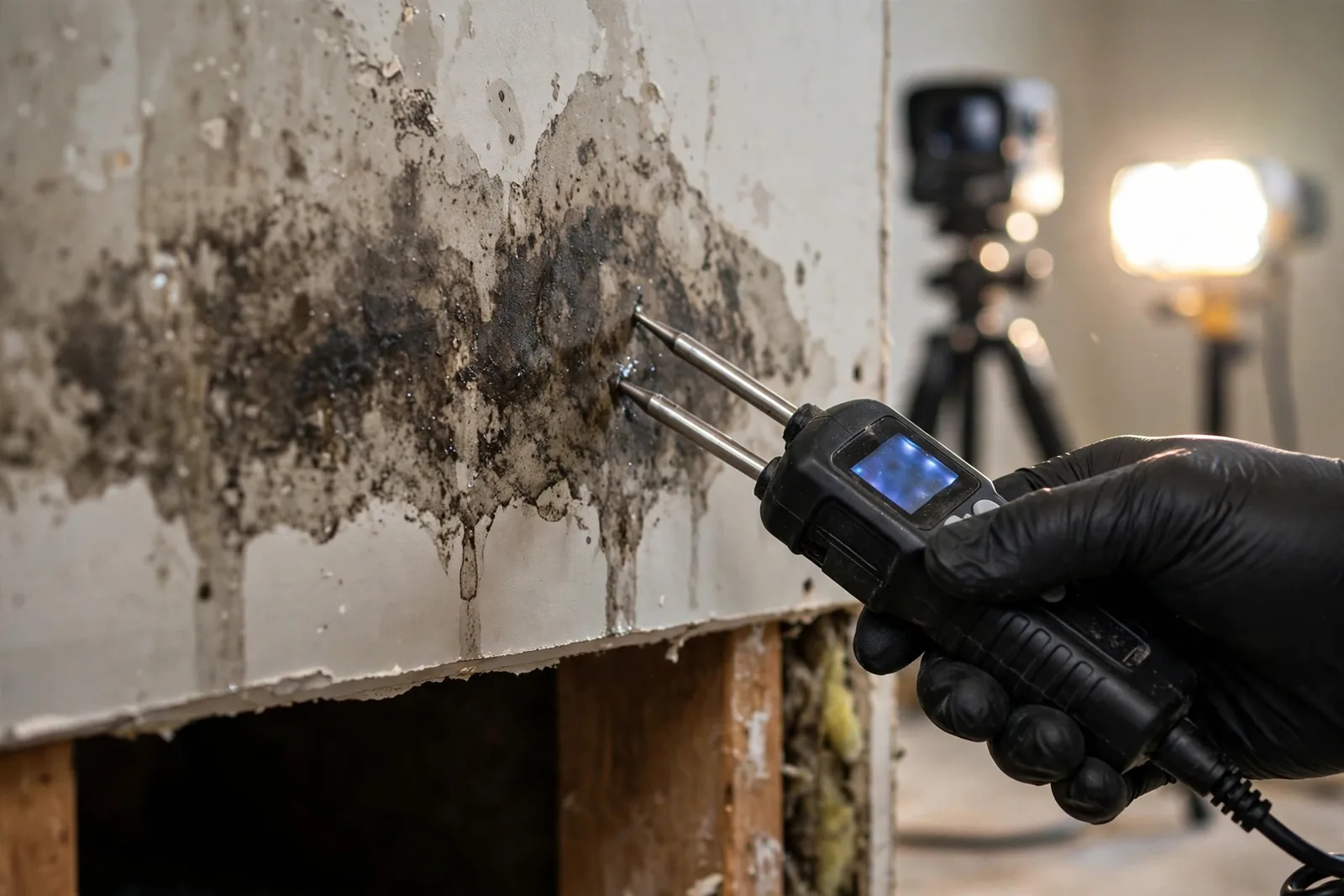
Those checks connect with the wider cleanup. Moisture mapping with a Moisture Meter and Thermal Imaging Camera shows how far water travelled inside walls and floors, which tells the trades where hidden wiring and duct runs may also be wet. If floors are still under water or walls are soaked, call (800) 555-0100 — one free call connects you with a local pro who can arrive in 30–60 minutes in the cities served and start extraction with a Submersible Pump and structural drying alongside the trade checks.
How Do You Reduce Electrical Damage In The Next Flood?
Preparation lowers the stakes next time. Keep the area around the panel clear so it can be reached from dry flooring, know where your main shutoff is, and store portable electrics up high rather than on garage and utility-room floors. Photographs of the panel and appliance labels, kept with your other records, speed up checks and claims.
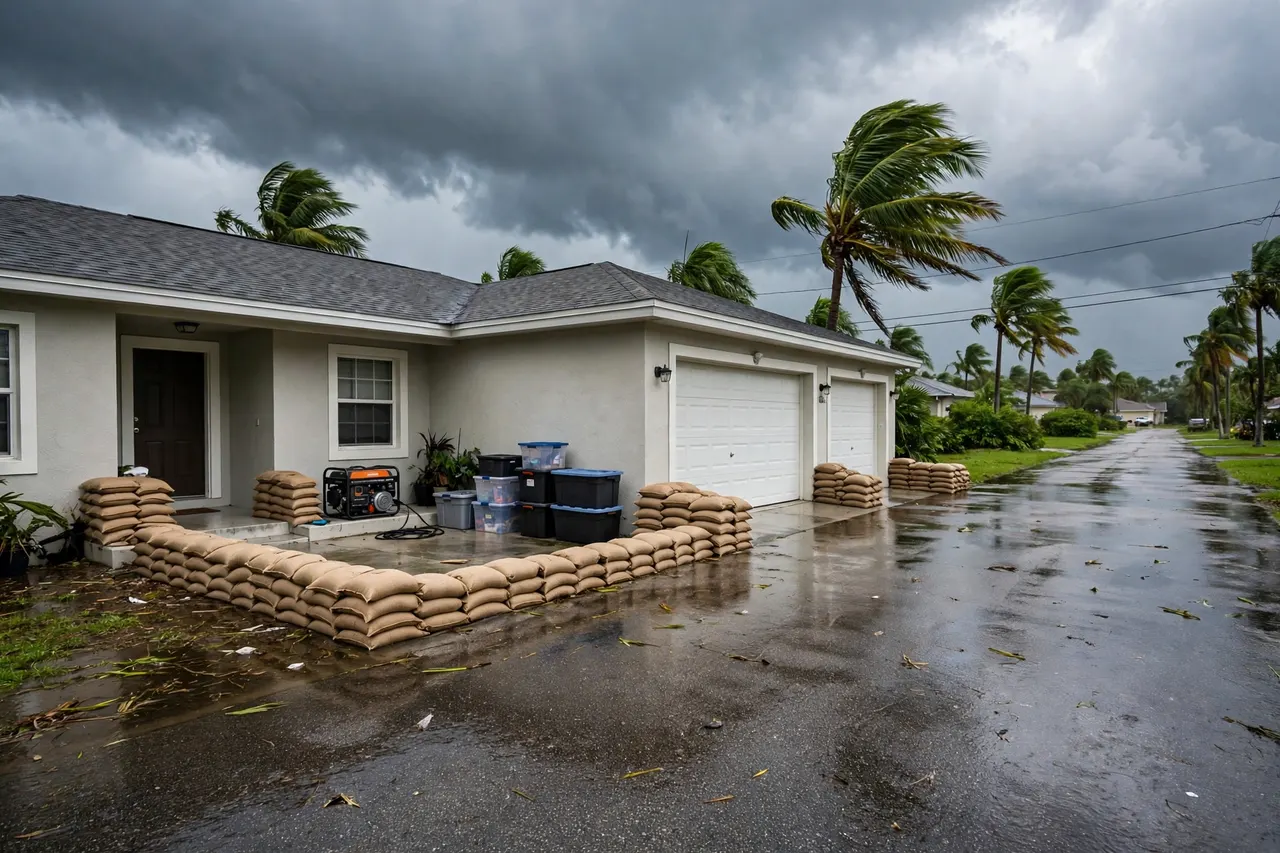
When a flood is forecast, turning off power to low-lying circuits before water arrives — from a dry panel, before any water is in the home — removes the live-water risk entirely. Raise what you can, move small appliances off the floor, and shut the HVAC system down if flooding of its area looks likely. Small steps taken early prevent the most dangerous hours later.