What To Do If Your Basement Floods
Reviewed By Hamza 9 Min Read
Quick Answer
If your basement floods, keep out of the water until you know the power is safe, switch off affected circuits from a dry place, stop the source if it is a plumbing failure, move belongings up out of the water, photograph everything, and get extraction started quickly — a flooded basement left wet can grow mold within 24 to 48 hours.
A flooded basement is usually discovered late — by a smell, a damp stair tread, or a trip downstairs after a storm. By then the water has had hours with your stored belongings, your flooring and the bottom of your walls. The steps below are ordered the way pros order them: safety, source, removal, drying, documentation, and then making it harder to happen again.
What Is The First Thing To Do When Your Basement Floods?
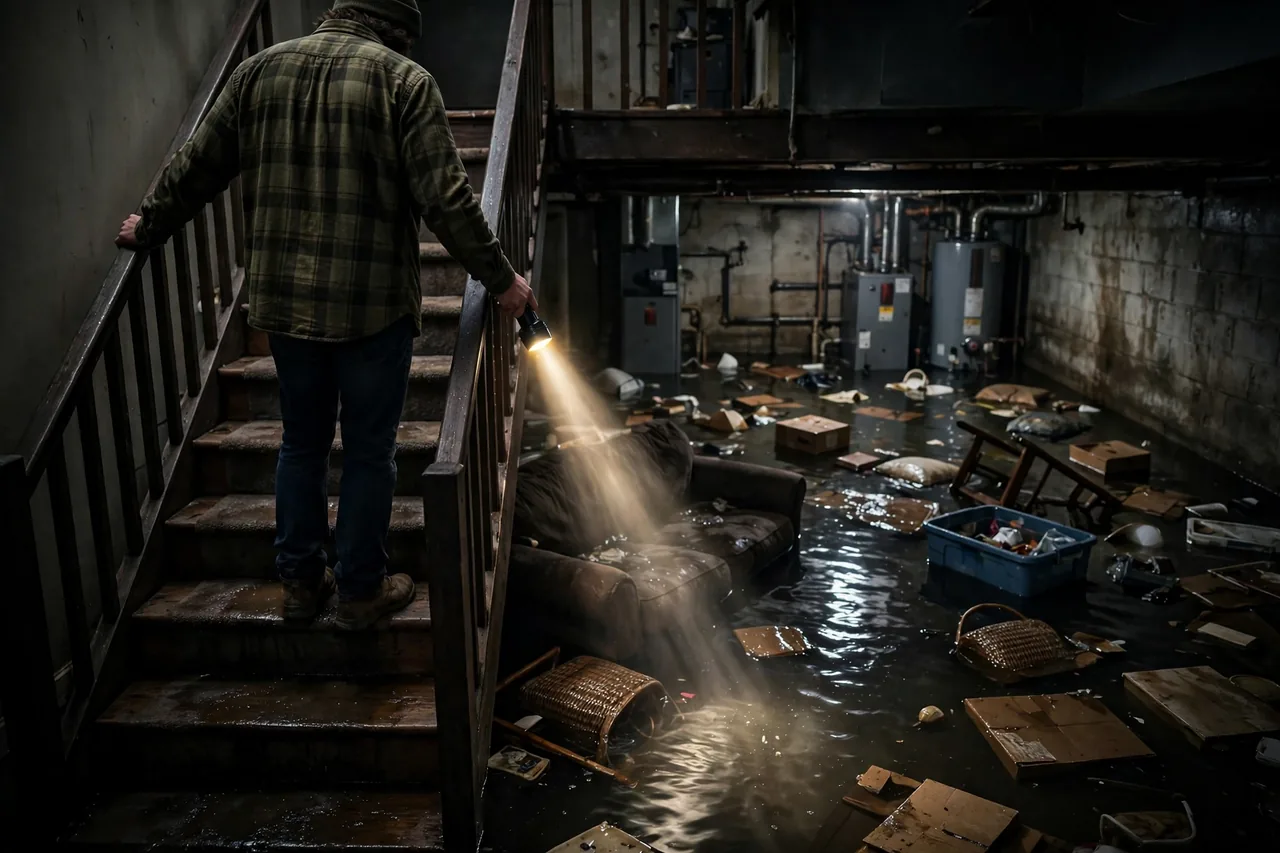
The first thing is to stop at the top of the stairs and assess, not wade in. Look at how deep the water is, whether it is still rising, and whether it reaches outlets, the water heater, the furnace or the electrical panel. If it touches any of those, do not go down. Switch off the basement circuits at the panel only if the panel sits in a dry area you can reach without entering the water.
Then identify the source from a safe spot. Water arriving during or after heavy rain points to groundwater seepage, sump pump failure or a drain backup. Water flowing on a dry day points to plumbing: a burst pipe, a failed water heater or a leaking appliance line. The source decides the next step — a valve you can close, or weather you must wait out.
Is It Safe To Go Down Into A Flooded Basement?
Only when the water is shallow, clearly not in contact with anything electrical, and free of any sewage smell. Flood water in a basement can hide a submerged outlet, a fallen object or a weakened stair tread, and water backed up through a floor drain is Category 3 water — it carries bacteria and should not touch skin if it can be avoided.
Wear boots and gloves if you do go down, carry a flashlight rather than relying on the basement lighting circuits, and never go down alone while water is still rising. If you are unsure about the electrics, stay up and wait: pros isolate power before they begin extraction, and a local pro can reach you in 30–60 minutes in the cities served.
How Do You Get Water Out Of A Flooded Basement?
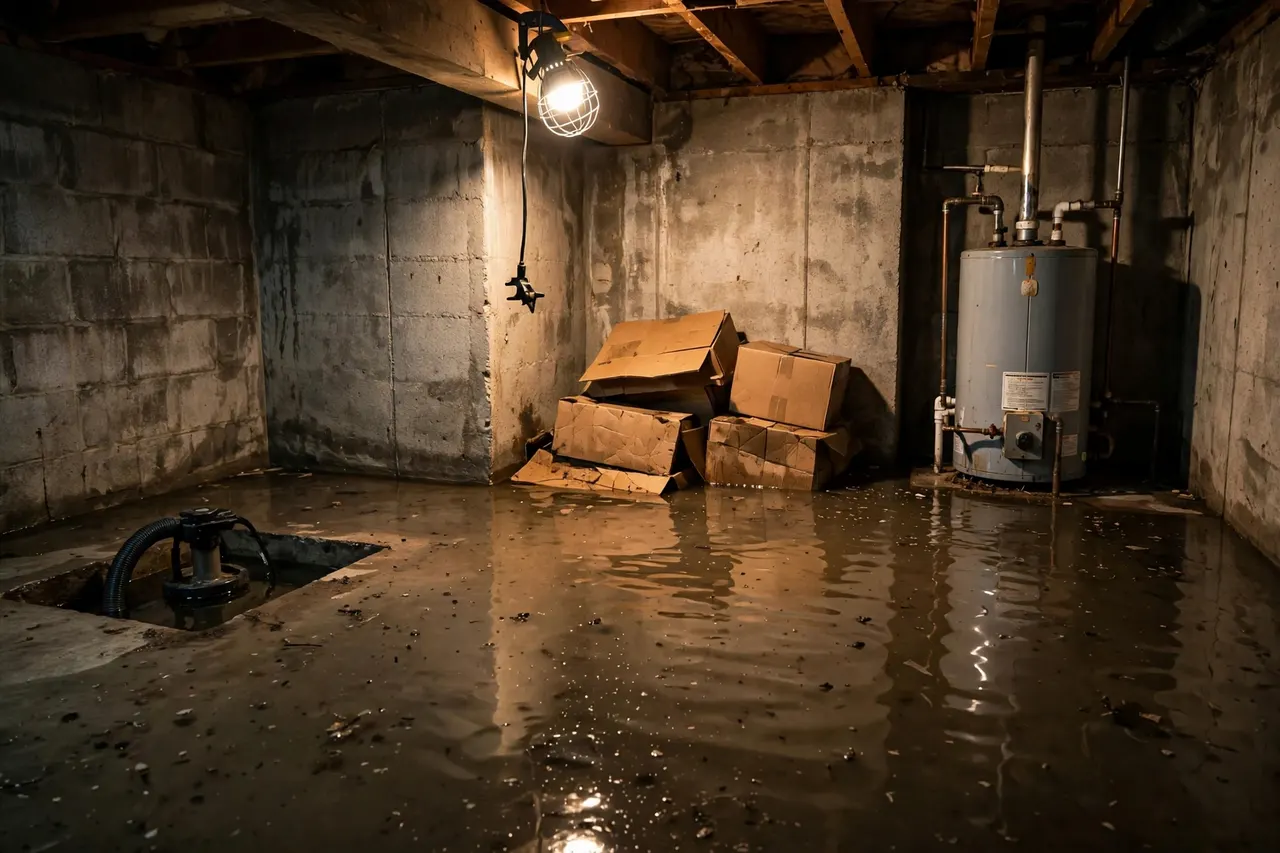
Water leaves a basement by pumping, not draining — there is nowhere lower for it to flow. A working sump pump handles shallow water at the pit. Deeper water needs a submersible pump, and pros bring truck-mounted extraction units that move large volumes quickly, followed by portable extraction in corners, closets and under stairs where the main equipment cannot reach.
Timing matters. If groundwater is still pressing in through the foundation during a storm, extraction waits until the inflow slows, or pumping chases water that keeps returning. Once the floor is clear, silt and mud come out before drying starts, because a mud layer keeps the concrete slab wet and feeds odour long after the surface looks clean.
What Should You Save, Move Or Throw Away?
Move first what water ruins fastest and matters most: documents, photographs, medicines and electronics, carried up without letting them drip through the house. Furniture that can be raised onto blocks buys drying time where it stands. A contents packout by a pro inventories everything else piece by piece, which also creates the itemised record an insurer wants to see.
Expect to discard porous items soaked by contaminated water: mattresses, pillows, upholstered furniture stored below the water line, and cardboard that has gone soft. Hard items — metal shelving, glass, sealed plastic bins — can usually be cleaned and disinfected. Carpet and carpet pad in a finished basement usually come out, so the subfloor or slab beneath can dry properly.
Flood Water In Your Home Right Now?
One free call connects you with a local pro near you.
How Do You Dry A Basement After Flooding?
Drying a basement means structural drying in a space that naturally stays cool and damp. Air movers push air across the slab and the bottom of the walls while a dehumidifier pulls moisture out of the air; in a below-ground room the dehumidifier does the heavy lifting, because evaporated moisture has nowhere else to go.
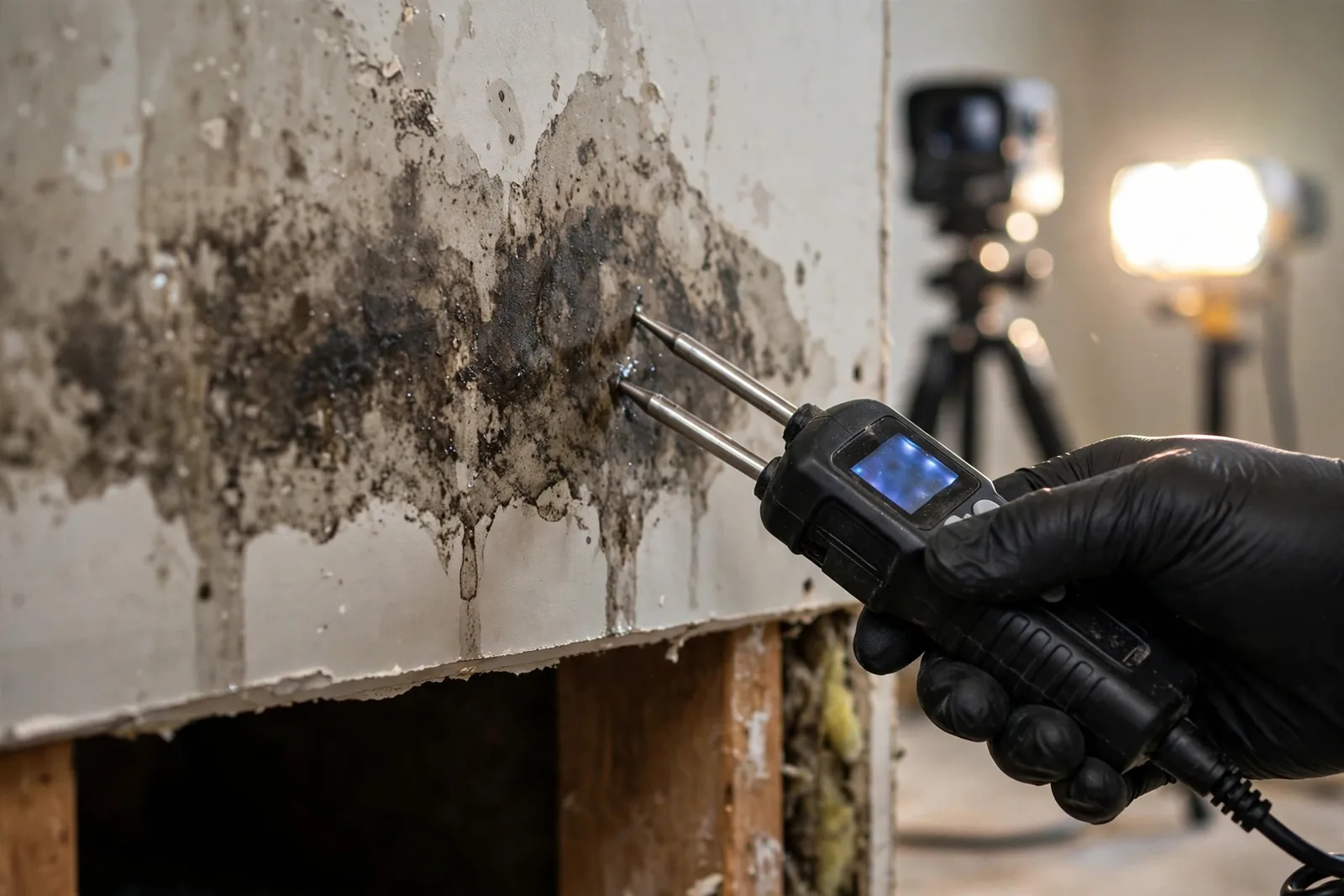
Pros verify progress with a moisture meter at marked points and keep a drying log until readings reach target. The bottom section of drywall may need a flood cut so the wall cavity and its insulation can dry — insulation that stays wet keeps a cavity damp for weeks. Baseboards come off for the same reason. Drying is finished when readings say so, not when surfaces feel dry.
How Do You Stop Mold After A Basement Flood?
Speed and dryness stop mold. Black mold can begin growing on wet drywall, wood and stored paper within 24 to 48 hours, so extraction within the first day is the strongest protection you can give the space. Antimicrobial treatment applied to framing, the sill plate and the slab after cleaning deals with what flood water left behind on surfaces that stay.
Remove the materials mold feeds on when they cannot be dried: wet insulation, soaked carpet pad, waterlogged boxes. Run the dehumidifier until the drying log is closed, and check behind stored items and inside closets over the following weeks — a musty smell returning in one corner usually marks a pocket of moisture that mapping can find.
What Should You Photograph For Insurance?
Photograph the basement before anything is pumped or moved: the water depth against a wall or a stair, the water line it leaves behind, every damaged item where it sits, and the sump pump, water heater and HVAC system if water reached them. Photograph serial plates on appliances. Then keep photographing as items are removed, so nothing discarded is left undocumented.
Keep receipts for pumps, fans and emergency work, and ask the pro for the drying log. Know which policy you are claiming on: standard homeowners insurance usually excludes outdoor flood water, while a separate flood policy through the National Flood Insurance Program, run by FEMA, covers flood damage. Either way, dated photographs are the evidence that travels furthest with a claim.
How Do You Reduce The Chance Of It Flooding Again?
Start with the cause this flood exposed. Sump pump failure argues for a maintained pump, a clear discharge line and a backup plan for power cuts. Groundwater seepage points to grading that slopes toward the foundation, downspouts discharging too close to the wall, and window wells that fill — each fixable outside the house, where the water starts.
Inside, store belongings on shelving rather than on the slab, keep documents and keepsakes upstairs, and look into the basement after every heavy rain so a small seep is found while it is still a mop-up. If the basement floods again despite the fixes, call (800) 555-0100 — one free call connects you with a local pro who can arrive in 30–60 minutes in the cities served.